
Table Of Content ☰
Concrete is a popular building material due to its strength and longevity. Concrete curing methods keep concrete moist, give concrete strength, avoid cracks, and increase its durability and hence the longer service of buildings and other structures.
What Is Concrete Curing?
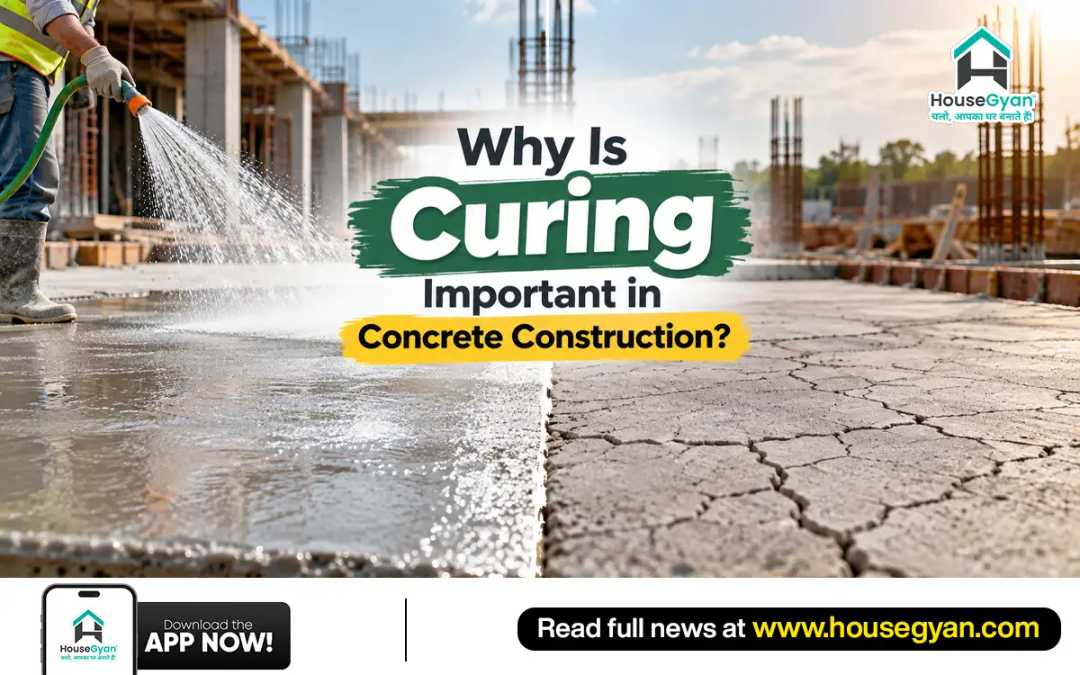
Concrete curing keeps the water present and at the proper temperature to ensure that cement sets and gains its strength. The importance of curing in concrete, as it prevents cracks, enhances durability, and ensures better performance due to proper curing in concrete construction.
Why Is Curing Important in Concrete Construction?
1. Improves Concrete Strength
The process of curing enables cement to interact with water and gain strength with time. Moisture also assists concrete in acquiring the required strength and enhances its capability to carry structural loads.
2. Prevents Surface Cracks
In hot or dry weather or even wind, concrete will lose moisture very easily. This can lead to contraction and cracks on the surface. Correct curing minimizes quick loss of moisture and aids in limiting cracks.
3. Increases Durability
Properly cured concrete tends to withstand wear, weather, and surface damage in comparison to poor concrete that has not been cured properly. It is capable of making floors, columns, beams, and slabs last longer.
4. Reduces Water Permeability
Curing properly will aid in creating a higher density of concrete structure that contains fewer interconnected pores. This minimizes the water entry and corrosion of reinforcement by moisture and other destructive chemicals.
5. Improves Surface Quality
Indeed, curing helps to have a harder and even surface of the concrete. It contributes to the decrease of dusting, flaking, and early surface damage, and concrete floors and other coating surfaces become more resistant.
Different Methods of Concrete Curing
Possible concrete curing methods are determined by the structure, weather conditions, site conditions, and project requirements.
1. Water Curing
Water curing is the practice of maintaining concrete constantly wet by ponding or sprouting or coating the surface with wet coverings like wet hessian. It is usually employed in slabs and floors as well as in other surfaces made of concrete.
2. Membrane Curing
Membrane curing involves application of a specially designed curing compound applied to the surface of the concrete. The compound creates a coating that minimizes evaporation of moisture. This is the technique to use when standard water curing is not feasible.
3. Plastic Sheet Curing
Freshly constructed concrete is covered with plastic sheets to minimize moisture loss. The sheets are to lie evenly over the surface and the edges must be sealed so that the air does not dry the concrete.
4. Steam Curing
Steam curing is a process that subjects concrete to regulated conditions of heat and moisture to hasten the buildup of strength. It is widely applied in the production of precast concrete when it is necessary to manufacture and handle it faster.
Read More: Ready Mix Concrete vs Site Mix Concrete: Which is Better?
How Long Should Concrete Be Cured?
Concrete curing time varies according to the type of cement used, weather, and the mix ratio of the concrete. Concrete made up of ordinary Portland cement is normally allowed to mature within a period of seven days. Curing may take a long time in hot weather or mixed cement. Adhere to the recommendations of the engineer and the relevant standards of construction.
Factors That Affect Concrete Curing
The effectiveness of curing depends upon several factors:
Temperature: High temperature enhances evaporation, and low temperature decelerates hydration.
Humidity: Dry air can result in increased moisture loss.
Wind: Blowing winds exert more evaporation on open surfaces.
Type of cement: The cement types vary in the speed at which they gain strength.
Concrete Mix: Water-cement ratio and mix composition influence hydration and performance.
Curing Method: Provided the method used should be appropriate to the surface and location of the building.
Common Concrete Curing Mistakes to Avoid
To prevent the following pitfalls when curing in concrete construction:
Starting Too Late: Seal the concrete to prevent water loss when feasible as quickly as possible without a spoiled finish.
Low Watering: Use water curing, ensuring the surface is always moist.
Stopping Too Early: Complete the recommended curing period instead of stopping when the concrete appears dry.
Ignoring Weather: Cover concrete with the power of sunlight, wind, and extreme temperature.
Uneven Curing: Be sure that all the exposed area is well moistened and covered.
Conclusion
Correct concrete curing enhances strength, avoids cracks, and prolongs life. The right concrete curing methods and the suggested concrete curing time assist in avoiding damages and in the long-term use of the construction.
Why HouseGyan?
HouseGyan provides useful construction, home improvement, and renovation guides to assist homeowners in making a good decision and in planning a project.
FAQs
1. Why is curing necessary in concrete construction?
Curing assists concrete in taking strength, avoiding cracks, and enhancing endurance.
2. How many days should concrete be cured?
The duration of curing concrete varies with site condition and cement but is usually between 7 and 12 days.
3. What would be the effect of not properly curing concrete?
It can crack, become weak, and wear out prematurely.
4. Which concrete curing method is most commonly used?
Water curing is practiced in order to keep the concrete wet.
5. When should water curing begin after concrete placement?
Begin working when the surface is hard enough so as to prevent damage. Protect it from drying beforehand.
6. Does curing increase the strength of concrete?
Yes, good curing contributes to the fact that concrete gains strength with time.