
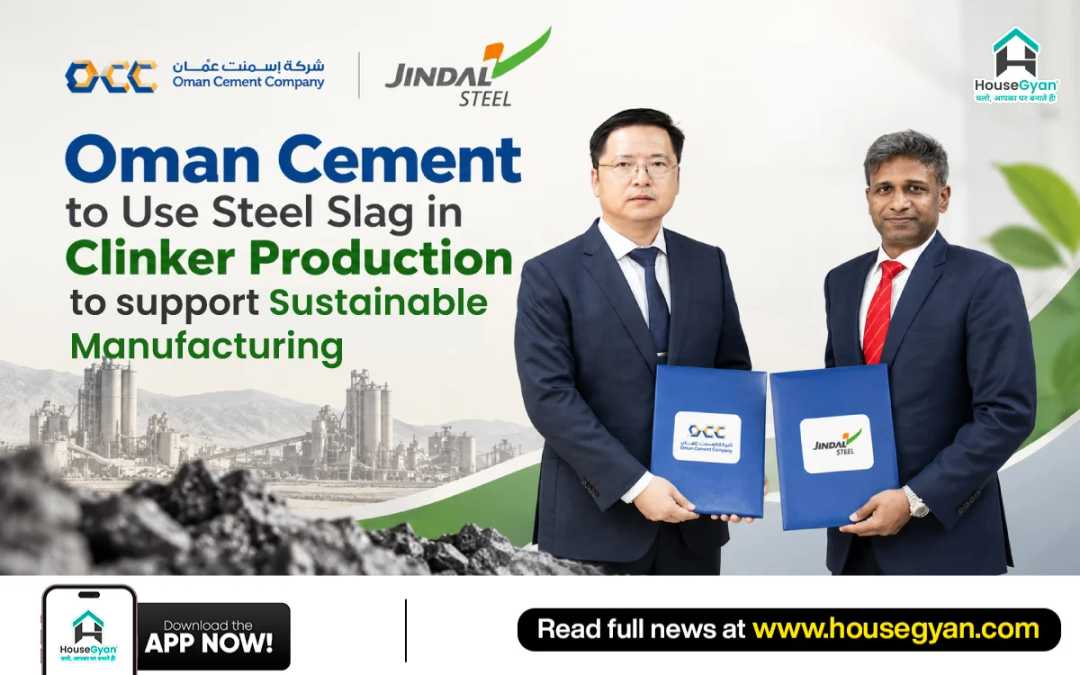
Oman Cement and Jindal Steel Oman have signed a three-year Memorandum of Understanding (MoU) to promote the sustainable use of steel slag in cement manufacturing. The agreement aims to utilise approximately 1 million tonnes of steel slag annually in Oman Cement’s clinker production process. Under the partnership, steel slag generated as a byproduct of steel manufacturing will be used as an alternative raw material in clinker production. The initiative is expected to reduce dependence on virgin raw materials, conserve natural resources and improve the utilisation of industrial byproducts. The agreement brings together the steel and cement industries to encourage more efficient resource utilisation and strengthen cooperation between the two sectors. The collaboration aims to support lower-carbon cement production by promoting industrial symbiosis and circular economy practices. By reusing steel manufacturing waste in clinker production, the companies intend to create a more resource-efficient industrial process. The initiative also supports Oman’s Net Zero 2050 ambition by establishing a productive link between the country’s steel and cement industries. The three-year MoU was signed by Jiang Tao, Acting CEO of Oman Cement, part of Huaxin Cement, and Harssha Shetty, CEO of Jindal Steel Oman. Oman Cement and Jindal Steel Oman’s agreement marks a step towards more sustainable clinker production through the use of steel slag. With approximately 1 million tonnes of steel slag targeted for annual utilisation, the partnership aims to conserve natural resources, reduce reliance on conventional raw materials and support Oman’s long-term environmental goals.Steel Slag to Replace Conventional Raw Materials
Focus on Sustainable Cement Production
Agreement Signed by Company Leaders
The partnership highlights the potential for industrial byproducts to serve as valuable resources in cement manufacturing while supporting sustainability objectives.Conclusion
FAQs
1. What agreement have Oman Cement and Jindal Steel Oman signed?
Oman Cement and Jindal Steel Oman have signed a three-year Memorandum of Understanding (MoU) to use steel slag in clinker production.
2. How much steel slag will be used annually?
The partnership aims to utilise approximately 1 million tonnes of steel slag annually in clinker manufacturing.
3. What is the purpose of using steel slag in clinker production?
Steel slag will serve as an alternative raw material, helping conserve natural resources and reduce dependence on conventional raw materials.
4. How will the agreement support sustainable cement production?
The initiative promotes industrial byproduct reuse, resource efficiency and circular economy practices, supporting more sustainable cement manufacturing.
5. Who signed the MoU between the two companies?
The agreement was signed by Jiang Tao, Acting CEO of Oman Cement, and Harssha Shetty, CEO of Jindal Steel Oman.
6. How does the partnership support Oman’s environmental goals?
The initiative supports Oman’s Net Zero 2050 ambition by encouraging resource-efficient manufacturing and the productive reuse of steel industry byproducts.