
Table Of Content ☰
- 1. What Is Toughened Glass? Pros and Cons
- 2. What Is Laminated Glass? Pros and Cons
- 3. Toughened vs Laminated Glass: Key Differences
- 4. Toughened vs Laminated Glass: Which Is Safer?
- 5. Where Is Toughened Glass Commonly Used?
- 6. Where Is Laminated Glass Commonly Used?
- 7. How to Choose Between Toughened and Laminated Glass
- 8. Conclusion
- 9. Why Housegyan?
- 10. FAQs
Glass is now extensively applied in residential and commercial buildings as windows, doors, balconies, partitions, and as facades. An important comparison Toughened glass vs laminated glass is vital in situations where safety, strength, heat, and sound control are important. They are both kinds of safety glass and, however, they act differently to that of a broken glass. The correct decision lies in the location of the glass installation and extent of protection needed.
What Is Toughened Glass? Pros and Cons
Tempered glass or toughened glass is glass that is heated, then cooled very rapidly to make it stronger than standard glass. The Toughened glass benefits are enhanced impact strength, safer break, and excellent thermal dissipation.
Pros:
Increased impact and thermal stress resistance.
Cuts into little sharp-ended bits.
Appropriate on doors, shower enclosures, windows, and furniture.
Useful for many toughened glass for home applications.
Cons:
Can neither be cut nor altered once tempered.
After breaking, it does not stay in place.
Usually provides less sound and UV protection than specialized laminated glass.
What Is Laminated Glass? Pros and Cons
Laminated glass involves the interlocking of two or more sheets of glass by an interlayer. In case the glass is broken, the interlayer assists in keeping the pieces in place. The laminated glass benefits are that they retain fragments, insulate sound, and possibly protect from UV.
Pros:
Grasps glass together.
Good performance in terms of safety.
Can enhance sound insulation.
Depending on the interlayer, it can provide UV protection.
Applicable in glazing of balconies, skylights, facades, and security-specific glazing.
Cons:
Normally more expensive than simple toughened glass.
More than a glass pane of the same thickness.
Needs appropriate installation and framing.
Laminated glass for home can be placed on softer frameworks and installed by professionals.
Toughened vs Laminated Glass: Key Differences
1. Manufacturing Process
Glass is hardened through heat treatment but cooled quickly to make it strong.
Laminated glass unites several layers of glasses with a layer between to hold the fragments.
2. Strength and Impact Resistance
Hardened glass is resistant to strikes and thermal shock.
Laminated glass consists of tough layers of glass and a protection layer added in between.
3. Behaviour When Broken
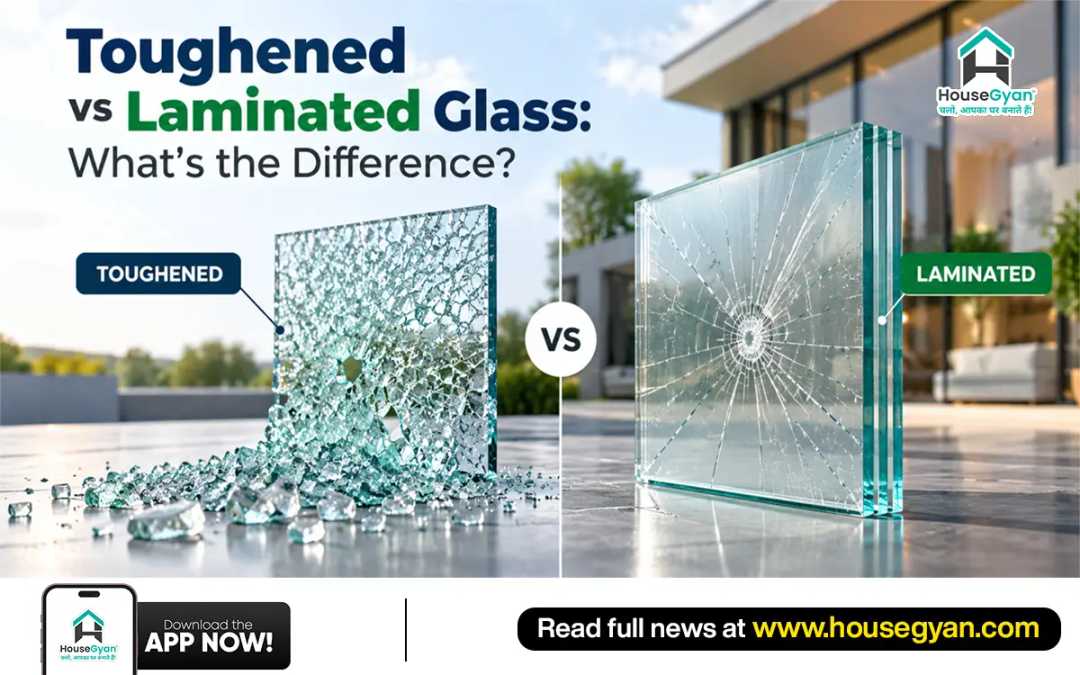
Toughened glass breaks into small, blunt pieces.
Laminated glass fractures and holds off pieces with its interlayer.
4. Safety
Both are safety glasses. Hardened glass minimizes pointy pieces.
Laminated glass will not stop falling fragments.
5. Sound Insulation
Better sound insulation is possible with laminated glass.
depending on the interlayer and glazing system, toughened glass
6. UV Protection
Depending on the specification of the product, laminated glass may minimize UV transmission in the case of appropriate interlayers.
7. Heat Resistance
Hardened glass is heat-resistant.
Laminated glass performance is determined by the layers of the glass, its interlayer, and temperature requirements.
8. Cost
Toughened glass is generally more affordable.
Laminated glass can cost more due to its interlayer and specialized construction.
9. Common Applications
Doors, windows, showers, and partitions are made of toughened glass.
Laminated glass applies to balconies and skylights, facade and security-centric applications.
Read More: Types of Glass Used in Construction: A Complete Guide.
Toughened vs Laminated Glass: Which Is Safer?
Toughened Glass
Shatters into smoldering bits.
Minimizes the danger of big sharp pieces.
Appropriate to doors, showers, windows, and partitions.
Toughened glass benefits include strength and safer breakage characteristics.
Laminated Glass
Grasps glass between hands with interlayer.
Reduces the risk of fragments falling away.
Applicable in balconies, skylights, and overhead glazing.
Laminated glass benefits are keeping fragments and possible sound insulation.
Where Is Toughened Glass Commonly Used?
Read More: 13 Popular Types of Window Glasses for Your Home.
Where Is Laminated Glass Commonly Used?
1. Balcony and Railing Applications - In selected balcony and railing systems, laminated glass can be used to retain glass fragments in the event of a breakage.
2. Skylights - Its fragment-retention capability may prove useful in overhead glazing.
3. Large Windows and Facades - Where it is necessary to have safety, sound control or solar performance, laminated glass may be regarded.
4. Areas Requiring Better Sound Insulation - When applied as a component of a suitable glazing system, acoustic laminated glass has the potential to reduce sound transmission.
5. Security-Focused Glazing - Additional protection against impact and forced entry may be offered by special laminated constructions.
How to Choose Between Toughened and Laminated Glass
Location: Decide where the glass will be located.
Safety: Decide whether fragment retention is important.
Heat: Check thermal and temperature requirements.
Sound: Think about acoustic needs, laminated.
UV: Determine the performance of the actual glass and interlayers.
Budget: Compare the complete material and installation cost.
Building standards: Follow applicable safety and glazing requirements.
Conclusion
The difference between toughened and laminated glass is primarily due to their build and break-up behavior. Toughened glass is very strong and less dangerous to break in small chunks, whereas laminated glass possesses an interlayer to assist in containing the broken glass. To select toughened glass to use in the home or laminated glass to use in the home, select based on application, safety considerations, climatic factors, performance, and budget.
Why Housegyan?
Housegyan is a simple and practical source of information on home materials, interiors, construction, and design. Its guides assist homeowners in knowing the difference in products and making wise decisions.
FAQs
1. What is the difference between toughened and laminated glass?
Heat-treated glass is toughened, with laminated glass being prepared with an interlayer to keep the broken pieces in place.
2. Which is safer, toughened glass or laminated glass?
Both are safety glasses. Laminated glass has a superior fragment retention, and toughened glass disintegrates into small bodies.
3. Is laminated glass stronger than toughened glass?
Not always. The glass thickness, construction, and product specifications determine the strength.
4. What happens when toughened glass breaks?
It does not normally wear off into big sharp edges but rather into tiny blunt edges.
5. What happens when laminated glass breaks?
It can break, and the interlayer can hold the fragments together.
6. Which glass is better for balcony railings?
Laminated glass may be appropriate since it assists in retaining fragments in case glass breaks.