
Table Of Content ☰
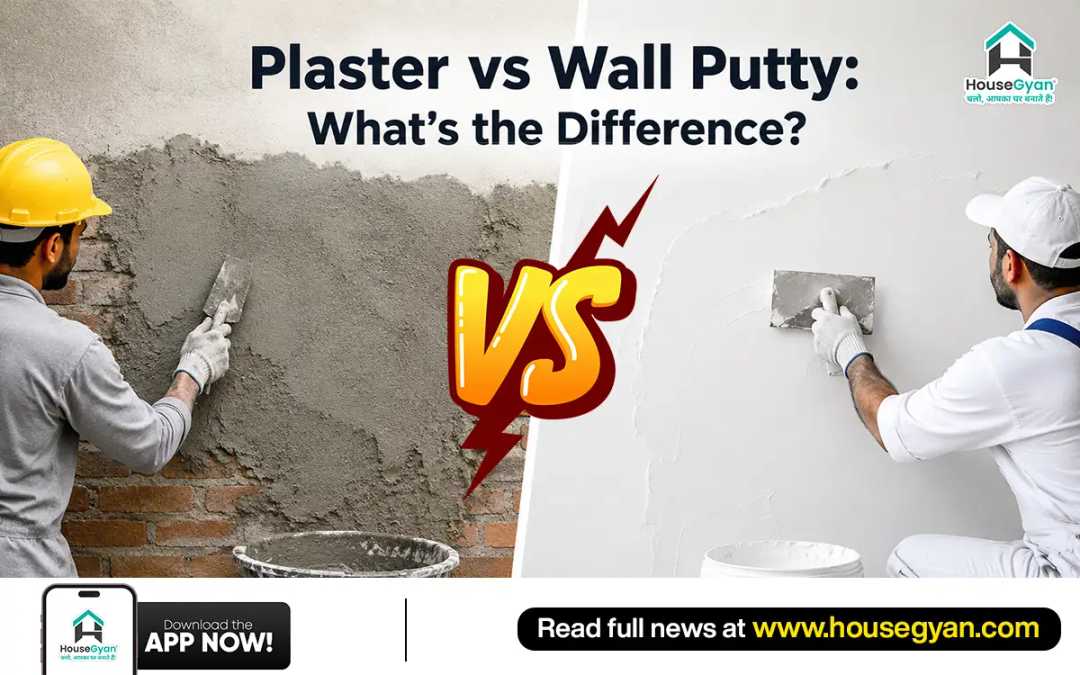
Proper wall finish, which will be smooth and long-lasting, begins with the choice of material. Sometimes it can be confusing to understand the difference between plaster vs wall putty, as both have their own uses in construction and painting. Plaster is used to build the wall foundation level and the wall body is smoothened using wall putty for painting.
What Is Wall Plaster?
Wall plaster is the material put directly on brick, concrete or block walls to form a stable, level, and even surface. It's used as the base of a painting or other type of decoration. The most common types are cement plaster and gypsum plaster.
1. Purpose of Wall Plaster
Wall plaster serves as a smooth, durable substrate on top of the underlying uneven masonry, cracks and joints. It increases the strength of the wall and makes it ready for the next finish.
2. Types of Wall Plaster
Cement Plaster: Prepared from cement, sand and water. It can be used for walls inside and out because of its strength and moisture resistance.
Gypsum Plaster: Gypsum powder is used for the preparation. Provides a smooth surface texture, mainly on interior walls and ceilings
3. Advantages of Plaster
-
Produces nice and even wall surfaces.
-
Covers cracking, joints and irregular masonry.
-
Improves wall durability.
-
May be used in both residence and business structures.
-
Supplies a good foundation for painting and wall putty.
4. Limitations of Plaster
-
Is not able to deliver a smooth paint ready finish.
-
Needs correct curing (particularly of cement plaster).
-
May crack when incorrectly applied.
-
Typically requires wall putting before painting.
What Is Wall Putty?
Wall putty is a fine finishing product used to plaster the walls prior to paint. It fills small holes, smoothes surface, and enhances paint adhesion. White cement putty is the most commonly used wall putty in India.
1. Purpose of Wall Putty
Wall putty gives a levelled surface for the paint. Additionally, it makes paint last longer and adds to the overall look of walls.
2. Types of Wall Putty
White Cement Putty: Has high strength, waterproof, and durability.
Acrylic Wall Putty: Ready-mixed putty primarily for the interior walls and repairs.
3. Advantages of Wall Putty
-
Gives a very nice and quality wall finish.
-
Improves paint adhesion.
-
Increases paint life.
-
Covers up small surface flaws.
-
Brightens paint colours.
4. Limitations of Wall Putty
-
Cannot replace plaster.
-
It can be applied only to well plastered walls.
-
Adds extra cost to painting work.
-
Not recommended for the repair of extensive wall damage.
Read More: 10 Stunning Wall Putty Design Ideas for Your Home 2026.
Plaster vs Wall Putty: Comparison Table
Key Differences Between Plaster and Wall Putty
The primary difference between plaster and putty comparison between the two types of plaster is their use. After that, wall putty is applied to create a smooth surface for painting as well as to provide strength to the walls.
Plaster is the basis structure, and putty enhances appearance and the effectiveness of paint. Another key difference between plaster and putty is thickness: Plaster is thicker than putty. In most construction projects, plaster comes first, followed by wall putty before primer and paint.
Read More: Wall Putty vs Crack Filler: Which Is Best for Your Home?
Do You Need Both Plaster and Wall Putty?
Yes. Generally, both materials are needed in order to finish the wall to a high standard.
Plaster is thick and forms a smooth surface; wall putting is thin and fills in minor gaps and holes to prepare the wall for painting. Avoiding wall putty can lead to uneven paint and reduced paint durability, as well as cracks. Plaster and putty are the best ways for painting preparation, in most cases.
How to Choose Between Plaster and Wall Putty
1. New Construction
When it comes to the new houses, apply the plaster first for the leveling, and then use the wall putty before painting the wall.
2. Home Renovation
If the old plaster is fine, all you need to do may be wall putty before re-painting. Any damaged plaster should be fixed first.
3. Interior Walls
The interior wall face can be smooth and looks good with the application of gypsum plaster and the latter with white cement putty.
4. Exterior Walls
The exterior wall should prefer to use cement plaster because it has better weather resistance and strength. Exterior-grade putty can be used if required.
5. Budget Considerations
Adding wall putty is technically more expensive in the initial investment, though it will make the paint last longer and therefore lower maintenance costs. A good investment, for long-term wall performance.
Common Mistakes to Avoid
Avoid these common mistakes during wall finishing:
-
Direct application of wall putty on the bare brick wall.
-
Painting directly over freshly applied plaster.
-
Failure to apply wall putty prior to painting.
-
Using interior putty on exterior walls.
-
Choosing poor-quality materials.
-
The use of putty on wet or unclean surfaces.
-
Not following manufacturer's recommended drying times.
By going through the correct procedures, a smoother finish is achieved and the paint lasts longer.
Conclusion
In order to use the correct wall finishes and to build beautiful and sturdy walls, understanding the difference between plaster and wall putty is crucial to making the right choice. Wall putty vs plaster imparts strength and base to the structure, wall putty vs plaster before painting while wall putty is used to finish the walls, providing a smooth surface that enhances the aesthetic appeal and facilitates painting. It will work best if both materials are used in order. By having these steps correctly taken, your walls and paint look better and last longer.
FAQs
1. What is the difference between plaster and wall putty?
The main difference between plaster and wall putty lies in their functions and different applications.
2. Is wall putty applied before or after plaster?
Wall putty is always used after drying of the plastering work.
3. Can I paint directly on plaster without wall putty?
Yes, but the finish might not be so smooth, and the paint might not last so long. Wall putty gives a professional and long lasting finish.
4. Which is better for interior walls: plaster or wall putty?
Both are important. Plaster is used to make the base, and wall putty makes the interior wall finish smooth before painting.
5. Does wall putty increase the durability of paint?
Yes, applying wall putty helps to increase the paint sticking to the surface and reduces any roughness or unevenness while also prolonging the lifespan of the paint itself.
6. Can wall putty be used on exterior walls?
Yes. White cement putty, which is formulated for exterior use may be used on exterior walls over properly cured cement plaster.