
Table Of Content ☰
- 1. What Is an MCB?
- 2. What Is an RCCB?
- 3. What Is an RCBO?
- 4. MCB vs RCCB vs RCBO: Key Differences
- 5. MCB, RCCB and RCBO: Which One Do You Need?
- 6. MCB vs RCCB vs RCBO: How They Protect Your Home
- 7. Where Should These Devices Be Installed in a Home?
- 8. How to Choose the Right MCB, RCCB or RCBO
- 9. Conclusion
- 10. FAQs
Modern homes require the use of electricity but overloading, short circuiting or earth leakage can cause a shock, fire or damage to appliances. Different types of protection are given by electrical safety devices like MCB, RCCB, RCBO etc. The difference between MCB, RCCB, and RCBO helps you to select the correct safety device for your home.
What Is an MCB?
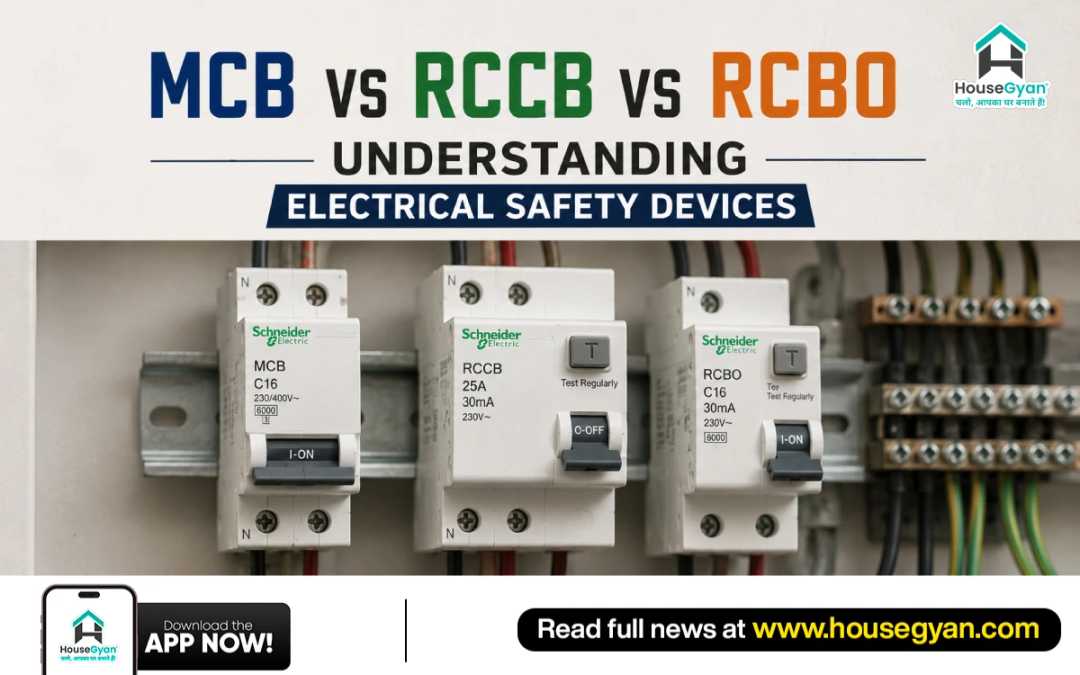
MCB means Miniature Circuit Breaker. MCBs are used for protection against overcurrent and short circuits. The primary function of an MCB for home use is to prevent damage to the electrical wires, cables, appliances, and circuits. After the fault has been rectified, the MCB can be reset rather than a fuse replaced.
What Is an RCCB?
RCCB stands for Residual Current Circuit Breaker. An RCCB senses a leakage to the ground. It constantly detects the difference in current between the live and neutral wire. In the event that part of the current goes out of the system through a different route, like a damaged appliance or by a person, the RCCB immediately cuts off the power supply.
What Is an RCBO?
The RCBO meaning is Residual Current Breaker with Overcurrent Protection. It combines the functions of an MCB and an RCCB in one device. Protection against overload/short circuit & earth leakage. Due to this sort of protection, a residential RCBO can safeguard not only electrical circuits but people as well.
MCB vs RCCB vs RCBO: Key Differences
MCB, RCCB and RCBO: Which One Do You Need?
1. When to Use an MCB
Implement an MCB as a protection device for short circuits and overload. MCBs are generally used on circuits of household loads like lights, sockets, air conditioners, water heaters, etc.
2. When to Use an RCCB
Consider using an RCCB if earth leakage and electric shock protection are required. It is particularly critical when people operate electrical equipment near kitchens, bathrooms, utility areas, or other environments that might increase moisture risks.
3. When to Use an RCBO
Install an RCBO on a single circuit to provide overload and short circuit protection as well as leakage protection.
Read More: Top 10 Best MCB Brands in India 2026.
MCB vs RCCB vs RCBO: How They Protect Your Home
1. Protection Against Overload - Overload occurs when a circuit draws a greater current than it is designed for. MCBs and RCBOs sense overcurrent and unplug the circuit.
2. Protection against Short Circuits - Sudden and dangerous surges may occur due to a short circuit. Regardless, MCBs and RCBOs act swiftly to help safeguard the cables and connected equipment.
3. Protection Against Earth Leakage - It is the leakage of the flow of electrical current away from its normal path. RCCB/RCBO detects this imbalance and automatically cuts off the supply.
4. Protection Against Electric Shock - RCCBs and RCBOs can minimize the risk of serious electric shock and detect leakage current quickly. But proper wiring, grounding, servicing and electrical safety are just as crucial.
5. Reducing Electrical Fire Risk - Fires can be caused by overheating wires, short circuits, and earth leakage. Appropriate Electrical Protection Devices keep faults contained.
Read More: Electrical Planning Checklist Before Home Interior and False Ceiling Work.
Where Should These Devices Be Installed in a Home?
-
MCBs, RCCBs, and RCBOs are normally installed inside the home's distribution board or consumer unit.
-
An electrician can use MCBs on one circuit and use an RCCB for blocks of circuits. RCBOs also can provide separate protection to individual circuits.
How to Choose the Right MCB, RCCB or RCBO
-
Check Load: Match the device with the circuit load.
-
Choose Rating: Select the correct current rating.
-
Check Poles: Select the correct pole setting
-
Check Sensitivity: Select the appropriate RCCB/RCBO sensitivity.
-
Match Application: Choose based on application.
-
Choose Trusted Brands: Use certified, reliable devices.
Conclusion
Earth leakage is detected by RCCB, and overload and short circuit are detected by MCB. An RCBO combines both types of protection. Always know that when comparing MCB vs RCCB vs RCBO, you should consider what happens to each circuit and not just one for the whole house. When installed correctly by a qualified electrician, it can lead to a safer and more reliable electrical system.
FAQs
1. What is the difference between MCB, RCCB, RCBO?
MCB: Protects against overload and short circuit, RCCB: Protects against earth leakage, RCBO: Protects against both.
2. Is RCCB better than MCB for home safety?
Both are good; they offer different protection. They are often used together or replaced by an RCBO.
3. Can an MCB and RCCB be used together?
Yes. The RCCB is responsible for earth leakage and the MCB for overcurrent faults.
5. Does an RCCB protect against short circuits?
No. An RCCB generally requires an MCB or other appropriate overcurrent protection device.
6. Which electrical safety device is best for a home?
This depends on the wiring, load, circuit configurations, and protection desired. MCB + RCCB or RCBO are common options.