
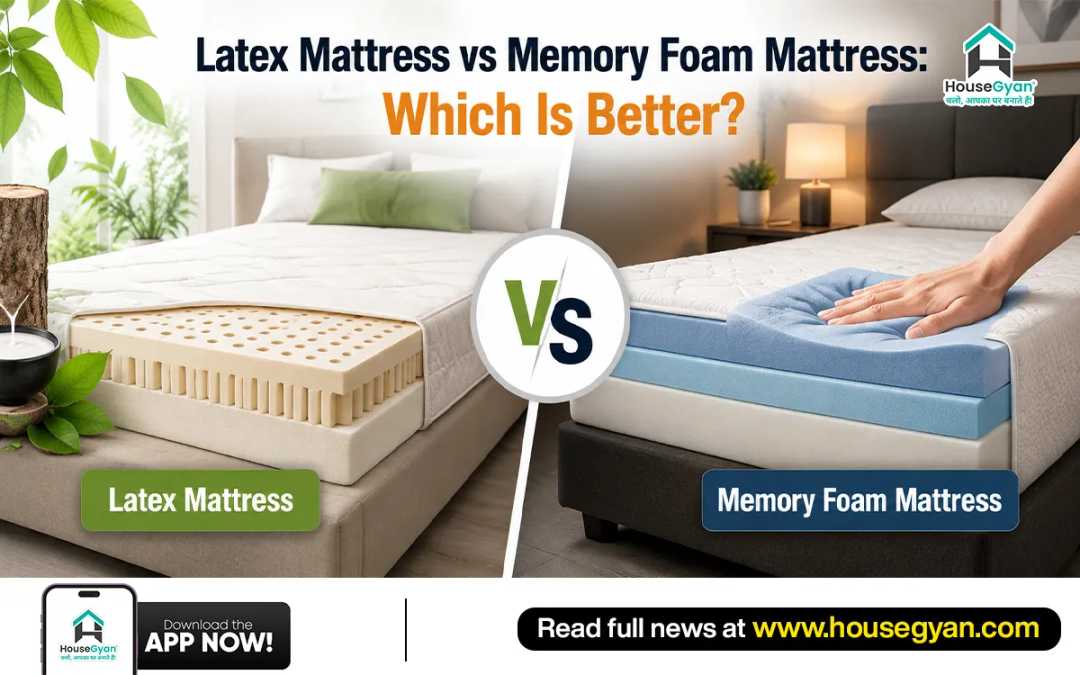
When it comes to mattress comparison, latex mattress with memory foam mattress, the most important areas are support, cooling, pressure alleviation, durability and price. Latex is responsive and spacious while Memory foam offers greater contouring, increased motion isolation. The sleeping posture, weight status, warmth sensitivity, and stiffness and budget should be the buyer's factors in selecting one. In this Guide we will see and compare the best mattress according to one's needs.
What Is a Latex Mattress?
A latex mattress is made of natural, synthetic or blended latex as both its primary comfort and padding material. Natural latex mattresses are created from rubber-tree sap through Dunlop or Talalay processes. It offers responsive support, quickly returns to shape and prevents excessive body sinking. It also feels naturally bouncy, improving one's ability to switch sleeping positions.
Advantages of Latex Mattresses
Good ventilation: Open cell latex and heat ventilation holes stimulate airflow.
Responsive support: Latex provides weight bearing support without deep sinking.
Less sagging: Thick latex will not sag or leave permanent marks
Easy movement: Sleepers who turn and twist are able to move freely on its bouncy surface.
Natural option: Natural latex, which is made from the sap of the rubber tree and is a renewable resource.
Better value: It is more expensive up front, but it should provide long-term savings if replacement is needed.
What Is a Memory Foam Mattress?
Memory foam mattress consist of viscoelastic polyurethane foam which reacts to heat and also stress. Tracks body contours well, supports shoulders and hips, and gradually returns to form. It offers excellent pressure reduction, motion alleviation, quieter performance, and affordability over natural latex mattress products.
Advantages of Memory Foam Mattresses
Memory foam conforms well,
Pressure relief and isolation of movement.
It provides padding for shoulders and hips and tends to be less expensive,
However, foam does maintain heat.
Read More: Top 10 Best Mattress Brands in India 2026.
Latex Mattress vs Memory Foam Mattress: Key Differences
Factor | Latex Mattress | Memory Foam Mattress |
Feel | Bouncy and easy to move on | Soft and body-hugging |
Pressure Relief | Supports without deep sinking | Cushions the hips and shoulders |
Spine Support | Supports alignment with proper firmness | Supports alignment with proper firmness |
Cooling | Cooler and more breathable | May retain body heat |
Motion Isolation | Transfers some movement | Absorbs movement better |
Durability | Around 8–12 years | Around 6–8 years |
Maintenance | Durable but heavy to move | Lighter and easier to handle |
Eco-Friendliness | Natural latex uses rubber-tree sap | Made mainly from polyurethane |
Price | More expensive | More affordable |
Best Value | Better for long-term use | Better for budget comfort |
Which Mattress Is Best for You?
1. Back Sleepers - A medium-firm latex mattress or memory foam mattress may help support your lower back and retain natural spinal alignment.
2. Side Sleepers - The bed mattress is medium–soft memory foam, which helps alleviate pressure points around the significant contact points of the shoulders and hips.
3. Stomach Sleepers - A firm latex mattress helps keep the spine in a more straight position and restricts access to too much hip sinking.
4. Couples - On one hand, Memory foam provides a better insulation against movement while Latex offers higher mobility, rebound, and edge support.
5. For Hot Sleepers - A ventilated natural latex mattress can supply a better airflow and generally hold less body heat than memory foam.
6. People with Back Pain - A medium firm bed mattress might use an equilibrium of support as well as cushioning for the back. If pain continues or is severe, seek medical counsel.
7. Budget Buyers - A memory foam mattress will typically be cheaper to buy in the first place. Latex can be more expensive but may be a better long-term investment as it will last longer.
Read More: Top 10 Best Air Mattresses in India 2026.
Buying Guide: How to Choose the Right Mattress
1. Firmness Level
The best mattress should go with the sleeping position. Side sleepers benefit from a softer cushioning, back sleepers enjoy a medium-firm feel and stomach sleepers enjoy something that is more firm.
2. Mattress Thickness
Choose an 8–12-inch mattress. The thicker and denser layers might be necessary for heavier sleepers.
3. Material Quality
Compare latex mattress vs memory foam mattress by looking at latex type, foam density, layers and certifications. Check the percentage of natural materials in a natural latex mattress.
4. Trial Period and Warranty
Choose a 7–10-year warranty and home trial. Research return policies, and what voids replacement.
5. Budget
A memory foam mattress will be less expensive, and a latex bed mattress will typically last longer. This mattress buying guide suggests long-term value in addition to discounts.
HouseGyan Offering | ||
Conclusion
A latex vs memory foam is a good choice for hot sleepers, people who move often, and those looking for longevity when buying a new mattress. A memory foam mattress offers better pressure relief, motion isolation and can be affordable. Sleeping position, body weight, sleep temperature sensitivity, and support needs and overall budget will all factor half the mattress you choose best.
FAQs
1. Which is better: a latex mattress or a memory foam mattress?
Latex provides cooling & springiness, memory foam provides contouring & motion control.
2. Is a latex mattress cooler than a memory foam mattress?
Yes, latex is generally not as heat-retaining.
3. Which mattress is better for back pain?
Either will do as long as neutrality is achieved with firmness.
4. How long do latex and memory foam mattresses last?
Latex typically have a lifespan of 8-12 years, while memory foam mattresses last approximately 6-8 years
5. Are latex mattresses worth the higher price?
Yes, but responsiveness + use duration count when cooling.
6. What should I consider before buying a latex or memory foam mattress?
Make comparisons on position, firmness, heat, isolation of movement, quality of product, trial period, warranty terms and cost.