
Table Of Content ☰
- 1. Smart Door Lock vs Traditional Lock – Which Is Safer?
- 2. What Is a Traditional Door Lock?
- 3. What Is a Smart Door Lock?
- 4. Smart Door Lock vs Traditional Lock: Core Differences
- 5. Smart Lock vs Traditional Deadbolt: Security Breakdown
- 6. Smart Locks vs Traditional Locks: Pros and Cons
- 7. Cybersecurity vs Physical Security Risks
- 8. Which Lock Is Safer for Different Use Cases?
- 9. Final Verdict: Which Lock Should You Choose?
- 10. Why HouseGyan?
- 11. Frequently Asked Questions (FAQs)
Smart Door Lock vs Traditional Lock – Which Is Safer?
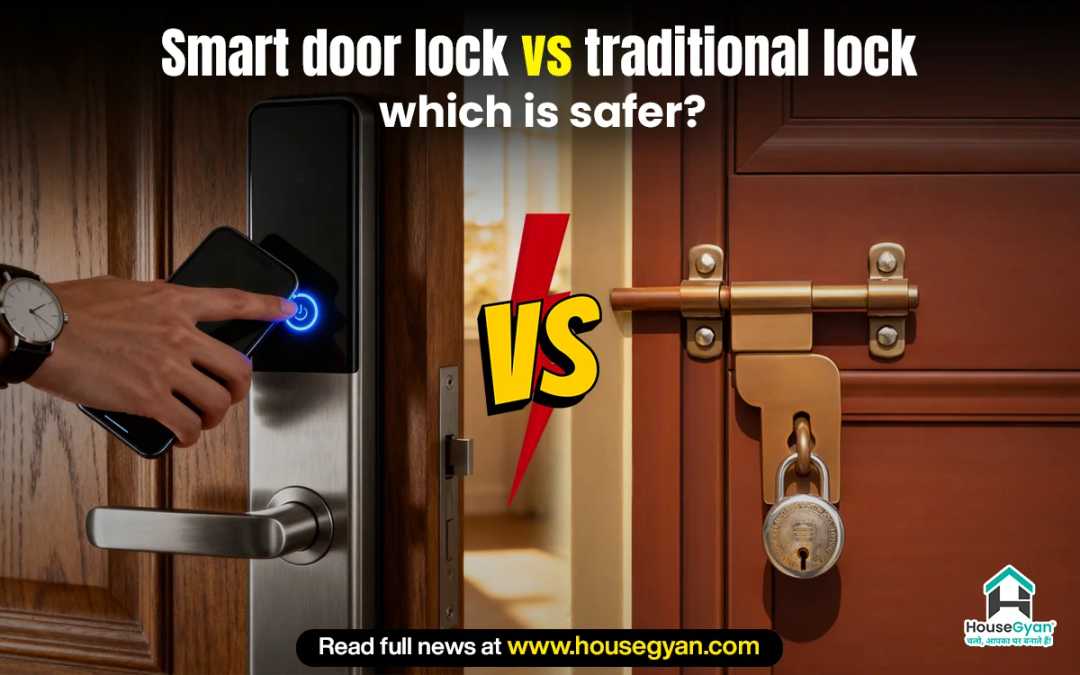
Home security has come a long way, and today homeowners often face one big question: smart door lock vs traditional lock – which is safer? With technology advancing rapidly, smart door locks promise convenience and control, while traditional door locks rely on time-tested mechanical strength.
Break-ins are no longer just about brute force. Criminals now exploit weak locks, predictable habits, and even outdated technology. Your door lock is the first line of defense, and choosing between smart locks vs traditional locks directly affects your safety, peace of mind, and even insurance eligibility. A traditional door lock is a mechanical locking system that has been used for decades, if not centuries. Traditional locks use physical keys and internal components like pins, cylinders, and bolts. When the correct key is inserted, it aligns the pins and allows the bolt to turn. Deadbolt locks Knob locks Lever handle locks Mortise locks Among these, deadbolts are considered the most secure. A smart door lock uses digital technology to lock and unlock doors without a physical key. Smart door locks operate using: PIN codes Fingerprints Smartphone apps Bluetooth or Wi-Fi Voice assistants Many smart locks for doors also integrate with home security systems. Keypad smart locks Biometric smart locks App-controlled smart locks Hybrid smart locks (key + digital) Read More: Compare the best smart door lock brands in India before you buy. Feature Smart Door Locks Traditional Door Locks Access App, PIN, fingerprint Physical key Remote Control Yes No Activity Logs Yes No Auto-Lock Yes No Convenience clearly favors smart door locks, but security goes deeper. Traditional locks are easier to install and don’t depend on power. Smart locks may require batteries, internet access, and compatible doors. High-quality traditional deadbolts are extremely strong against forced entry. However, premium smart locks also use reinforced bolts and hardened steel, making them equally resistant when properly installed. Traditional locks can be picked with tools and skill. Smart locks eliminate keyholes altogether, reducing picking risks significantly. No lost keys Temporary access for guests Real-time alerts Remote locking and unlocking Activity tracking Battery dependency Potential hacking risks Higher upfront cost No power needed Simple and reliable Lower cost Proven durability Keys can be lost or copied No access logs No remote control Read More: Compare the top door lock brands in India before choosing one. This is where smart lock vs traditional lock debates get intense. Smart locks face digital threats like hacking (though rare with reputable brands). Traditional locks face physical threats like lock picking and bumping. According to security experts, well-encrypted smart door locks from trusted brands are extremely difficult to hack. Apartments Smart locks are ideal due to controlled access and renter-friendly installation. Independent Homes A combination of smart door lock + traditional deadbolt offers maximum protection. Rental Properties Smart locks reduce key management issues and improve tenant turnover security. So, smart door lock vs traditional lock – which is safer? Choose smart door locks if you want control, convenience, and modern security. Choose traditional door locks if you prefer simplicity and mechanical reliability. For maximum safety, use smart locks with a traditional deadbolt. In today’s connected world, smart security isn’t just about technology—it’s about smart choices. Read More: Understand the various types of door locks used in homes. With so many home security options available today, deciding between a smart door lock and a traditional lock isn’t always easy. HouseGyan supports homeowners by offering: Clear Expert Insights – Easy-to-follow explanations on smart and traditional door lock safety Real-World Security Advice – Practical guidance based on everyday home use Side-by-Side Comparisons – Simple comparisons to help you understand key differences Informed Buying Support – Helps you focus on features that truly improve security HouseGyan simplifies home security choices and helps you protect your home with confidence. HouseGyan Offering Yes, in many cases. Smart locks remove risks like lost keys and offer monitoring features. No. Reputable smart locks use encryption similar to online banking. Most smart locks give advance warnings and include backup access options. Absolutely. A high-quality deadbolt remains very secure against forced entry. Smart locks win in convenience, while deadbolts excel in simplicity. Combined use is best. Yes, especially if you value convenience, monitoring, and modern security features.Why Door Lock Choice Matters More Than Ever
What Is a Traditional Door Lock?
How Traditional Door Locks Work
Types of Traditional Door Locks
What Is a Smart Door Lock?
How Smart Door Locks Work
Types of Smart Locks for Doors
Smart Door Lock vs Traditional Lock: Core Differences
Access Methods Compared
Installation and Compatibility
Smart Lock vs Traditional Deadbolt: Security Breakdown
Resistance to Forced Entry
Protection Against Lock Picking
Smart Locks vs Traditional Locks: Pros and Cons
Advantages of Smart Door Locks
Limitations of Smart Door Locks
Advantages of Traditional Door Locks
Limitations of Traditional Door Locks
Cybersecurity vs Physical Security Risks
Which Lock Is Safer for Different Use Cases?
Final Verdict: Which Lock Should You Choose?
The answer depends on your lifestyle.
Why HouseGyan?
Frequently Asked Questions (FAQs)
1. Are smart door locks safer than traditional door locks?
2. Can smart locks be hacked easily?
3. What happens if a smart lock battery dies?
4. Is a traditional deadbolt still secure?
5. Which is better: smart lock vs traditional deadbolt?
6. Are smart locks worth the investment?