
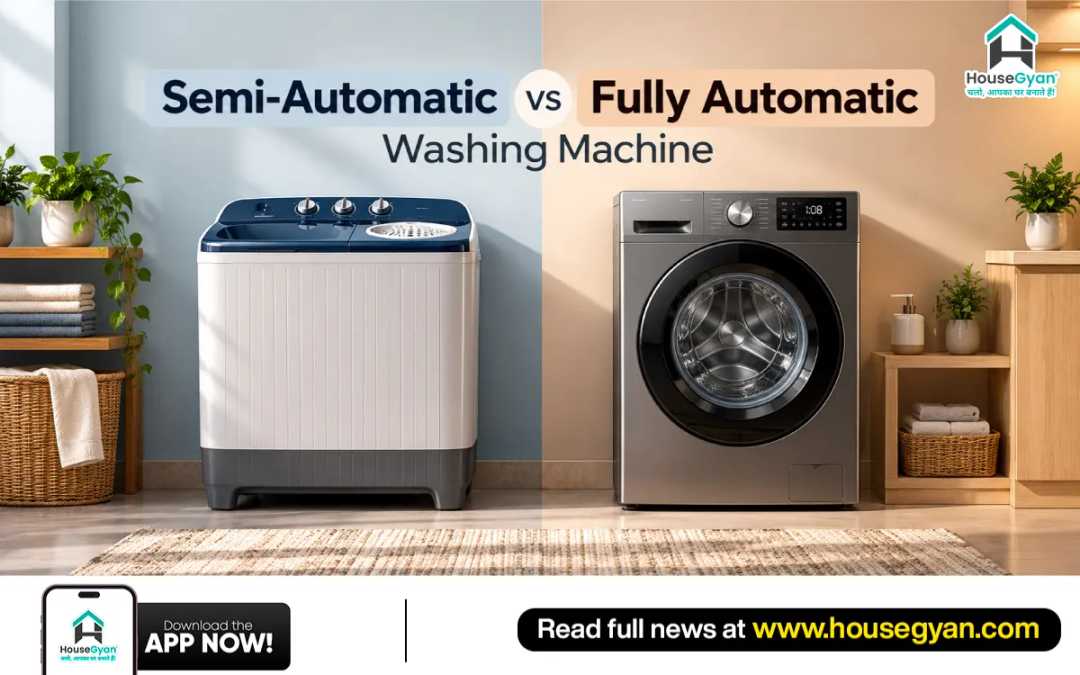
The selection of an appropriated washing machine helps in easing the laundry process and saves time. Nevertheless, the choice taken between a semi and fully automatic washing machine relies on prices, water supply, household size, and the everyday routine. Knowing their characteristics, benefits, and restrictions can aid you in deciding on the best washing machine for home.
What Is the Semi-Automatic Washing Machine? Pros and Cons
A semi-automatic washing machine generally is equipped with two distinct washing and spinning containers. You need to transfer clothes manually from the washing tub to the spin tub after washing.
Semi-Automatic Washing Machine Pros:
Usually commands a lower selling price.
Consumes less water in most cases where you take charge of water filling
Performs well where water is scarce.
Provides control over washing and rinsing manually
Semi-Automatic Washing Machine Cons:
Requires more manual effort.
Clothes should be moved between tubs
Takes more time to complete laundry.
This space demands a bigger twin-tub model
Also Read: Best Semi-Automatic Washing Machines in India
What Is a Fully Automatic Washing Machine? Pros and Cons
A fully automatic washing machine is capable of washing, rinsing and spinning within the same tub.
Fully Automatic Washing Machine Pros:
Less manual work is required.
Automatically washes, rinses, and spins clothes
Provides different wash programs of diverse fabrics.
Makes life more convenient in busy families
Fully Automatic Washing Machine Cons:
Generally more expensive at first.
Typically requires constant water supply.
Certain models can use more water, based on the programme.
Repairs and electronic parts may increase the amount of maintenance costs.
Also Read: Best Fully Automatic Top Load Washing Machines in India
Semi-Automatic vs. Fully Automatic Washing Machine: Key Differences
Real use, cost and size differ depending on model, capacity and type of washing machine
Which Washing Machine Uses Less Water and Electricity?
Semi-automatic washing machines consume less water since the consumer regulates water filling. When comparing a semi-automatic vs fully automatic washing machine comparison, the electricity usage is determined by the model, capacity, and a wash cycle. They both come with varying advantages and thus compare energy ratings, features, and prices to settle on the best washing machine at home.
Which Washing Machine Is Better for Your Home?
1. Budget-Conscious Families
A semi-automatic machine is a viable alternative in case the initial capital is small. It provides minimal washing capabilities and gives more freedom over water consumption.
2. Busy Households
A fully automatic machine is appropriate among those with tight schedules. It finishes washing, rinsing and spinning without having to transfer between tubs manually.
3. Small Families and Compact Homes
A smaller fully automatic model can be used in smaller spaces of the house. Before buying a machine, ensure that you check its dimensions, capacity, and installation requirements.
4. For Areas With Limited Water Supply
A semi-automatic machine can be a better option due to the ability to manually fill the tub and regulate the use of water. Nonetheless, the real savings lies in the usage of the machine.
Also Read: Washing Machine Brands in India
Factors to Consider Before Buying a Washing Machine
Family size: Choose a suitable drum capacity based on your regular laundry load
Budget:- Include purchase, installation, and maintenance costs
Water supply:- Verify water pressure and availability
Energy efficiency:- Compare electricity consumption and energy ratings
Available space:- Measure the installation area and allow room for opening doors
Wash programmes:- Find an environment that suits your clothing and material requirements
Service and warranty: Check warranty coverage and availability of local service
Why HouseGyan?
HouseGyan is the source of home design, construction, renovation, and home improvement practical information, its contents assist homeowners in organizing their living space and making wise decisions regarding their houses.
Conclusion
Select a semi-automatic washing machine because it is cheaper and offers water regulation, or one fully-automatic because it is convenient. Compare your budget, space, energy consumption, and maintenance needs to find the best washing machine for your home
FAQs
1. Which is better, a semi-automatic or fully automatic washing machine?.
Semi-automatic machines are cheaper, whereas fully automatic machines are more convenient.
2. Which washing machine consumes less water?
Semi-automatic machines are commonly much water efficient, since you do water filling.
3. Does a fully automatic washing machine use more electricity?
Not always. The use of electricity varies according to the model and wash programme.
4. Is a semi-automatic washing machine better for a low water supply?
Yes, it can be used in places where water supply is limited as it requires hands filling
5. Which washing machine is best for a family of four?
A four member family may own a 78kg capacity washing machine depending on how many people need to be done
6. What is the main difference between top-load and front-load washing machines?.
Top-load machines are loaded at the top, and front-load machines are loaded in the front