
Table Of Content ☰
- 1. What Is Grey Structure Construction? Advantages and Disadvantages
- 2. What Is Turnkey Construction? Advantages and Disadvantages
- 3. Grey Structure vs Turnkey Construction: Key Differences
- 4. Which Construction Method Is Best for You?
- 5. Factors to Consider Before Choosing Grey Structure or Turnkey Construction
- 6. Why Professional Project Management Makes a Difference
- 7. Conclusion
- 8. FAQs
If you're planning to build a home, one of the first decisions you'll face is choosing between grey structure vs turnkey construction. This choice shapes your budget, your timeline, and how involved you'll be in the entire house building process. Understanding both options is the foundation of any solid home construction guide, so let's break down what each method really means.
What Is Grey Structure Construction? Advantages and Disadvantages
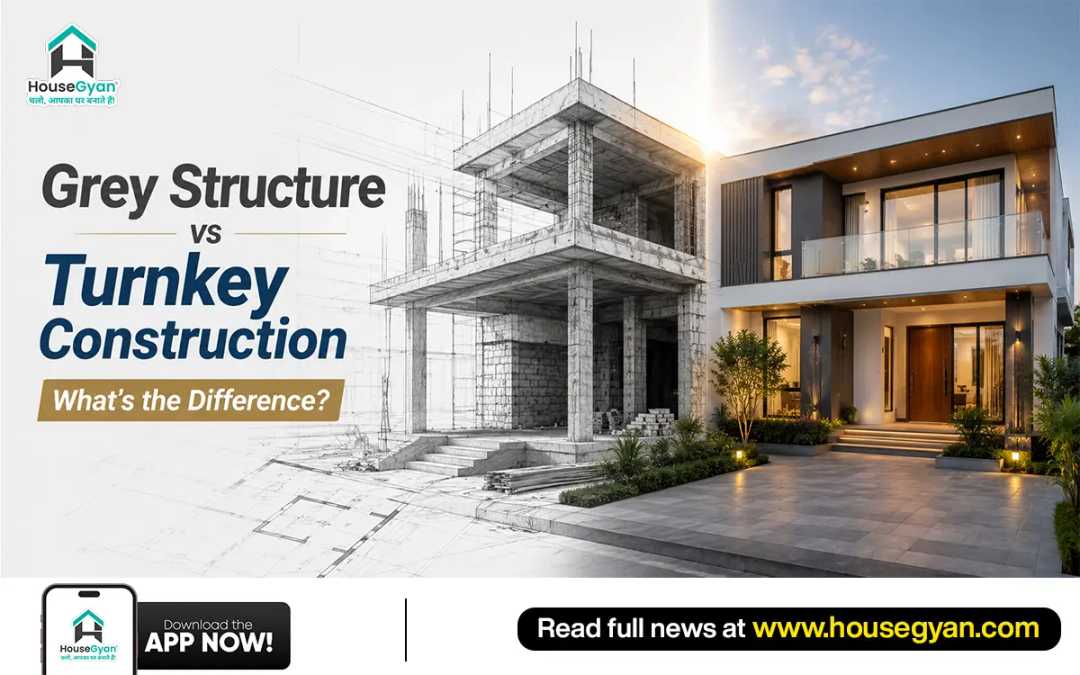
Grey structure refers to the basic skeleton of a house, foundation, walls, roof slab, and beams, built without finishing work like plastering, flooring, painting, electrical fittings, or fixtures. A grey structure house is essentially a shell ready for interior work.
Advantages:
Lower upfront cost since finishing materials aren't included.
Full control over interior design choices and finishing quality.
Flexibility to hire different contractors for different phases.
Ability to spread out spending over time.
Disadvantages:
Requires active homeowner involvement in managing multiple vendors.
Longer overall completion time.
Risk of cost overruns if not carefully budgeted.
Coordinating separate teams can be stressful without experience.
What Is Turnkey Construction? Advantages and Disadvantages
Turnkey construction meaning, in simple terms, is a "ready to move in" solution. The builder handles everything, from the foundation to final finishes, fittings, and fixtures, and hands you the keys to a completed home.
Advantages:
Hassle-free process with a single point of contact.
Fixed construction contract with clear cost and timeline.
Faster completion since one team manages the entire project.
Consistent quality control throughout.
Disadvantages:
Higher overall cost compared to grey structure.
Less flexibility in customizing individual finishes.
Dependent on the builder's reliability and reputation.
Grey Structure vs Turnkey Construction: Key Differences
Factor | Grey Structure | Turnkey Construction |
Scope | Shell only | Complete, move-in ready |
Cost | Lower initial investment | Higher, all-inclusive |
Time | Longer, phased | Faster, single timeline |
Control | High, hands-on | Low, builder-managed |
Vendor management | Owner coordinates multiple contractors | Single builder manages everything |
Quality consistency | Varies by contractor, needs supervision | Consistent, since one team oversees the whole build |
Payment structure | Phased payments tied to construction stages | Usually a fixed lump sum or milestone-based contract |
Design flexibility | High, choose finishes, fixtures, and layouts later | Limited, often restricted to builder's packages or pre-set options |
Risk exposure | Higher risk of delays, mismatched work, or budget overruns | Lower risk, since the builder is contractually responsible for the outcome |
When comparing turnkey vs grey structure, the real question isn't which is "better"; it's which matches your time, budget, and involvement level.
Read More: Types of Construction Chemicals Used in House Construction Explained.
Which Construction Method Is Best for You?
1. Budget-Conscious Homeowners - Grey structure construction lets you control spending phase by phase, making it easier to manage grey structure cost without committing to a large lump sum upfront.
2. Busy Professionals - If you don't have time to supervise contractors, turnkey house construction is ideal, you get a finished home without managing daily site work.
3. Luxury Homes - Turnkey construction suits high-end projects where consistent quality, premium finishes, and professional coordination matter more than saving on costs.
4. First-Time Home Builders - Turnkey construction reduces the learning curve of house construction, since the builder manages complexities you may not be familiar with.
5. For Investors - Grey structure can offer better margins for investors who plan to customize or sell later, while turnkey suits quick rental-ready properties.
Factors to Consider Before Choosing Grey Structure or Turnkey Construction
Budget flexibility: Consider whether you can manage phased payments or need one fixed price upfront.
Timeline: Factor in how soon you need to move into the home.
Involvement: Assess how much time you can realistically dedicate to managing vendors and inspections.
Customization needs: Decide whether you want full design control or prefer a ready-made solution.
Contractor reliability: Always verify credentials before signing any construction contract.
HouseGyan Offering | ||
Why Professional Project Management Makes a Difference
Whether you choose grey structure or turnkey construction, professional project management can prevent delays, cost overruns, and quality issues. Experienced managers coordinate vendors, ensure timelines are met, and maintain construction standards, turning a stressful house building process into a smooth one, regardless of which method you pick.
Conclusion
There's no universal winner in the grey structure vs turnkey construction debate. Grey structure offers cost control and flexibility, while turnkey construction offers convenience and speed. The right choice depends on your budget, timeline, and how hands-on you want to be. Whichever path you choose, professional guidance can make the journey far less stressful.
FAQs
1. What is the difference between grey structure and turnkey construction?
Grey structure covers only the basic shell of a house, while turnkey construction includes complete finishing and is ready for move-in.
2. Which is more cost-effective: grey structure or turnkey construction?
Grey structure typically has a lower initial cost, though total spending depends on how finishing work is managed afterward.
3. What work is included in grey structure construction?
It includes the foundation, walls, roof slab, and beams, without plastering, flooring, painting, or fixtures.
4. What is included in turnkey construction?
Everything from foundation to finishing, including electrical, plumbing, painting, and fixtures, so the home is ready to occupy.
5. Which construction method is better for first-time home builders?
Turnkey construction is generally easier for first-timers since the builder manages the entire process.
6. What factors should I consider before choosing grey structure or turnkey construction?
Consider your budget, timeline, level of involvement, customization needs, and the reliability of your contractor.