
Table Of Content ☰
- Understand Your Requirements
- Start with a Rough Sketch
- Here’s what to include:
- Consider the Size of Rooms
- Use Vastu or Feng Shui Principles (Optional)
- Plan for Natural Light and Ventilation
- Allocate Space for Storage
- Think About Future Expansion
- Use Professional Help or Design Software
- Don’t Forget the Exterior Design
- Review and Finalize Your Plan
- Conclusion
- FAQs
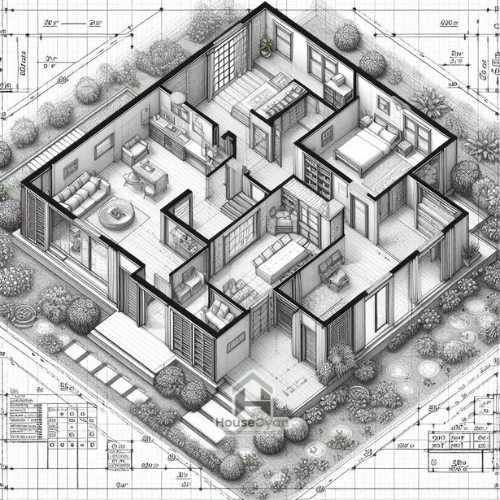
Designing your dream home starts with a house plan drawing. This plan is a detailed layout that helps you visualize the structure and flow of your home before construction begins. Whether you're building a small house or a large one, having the right house plan drawing ensures that every space is functional, organized, and suits your needs.
In this blog, we’ll cover essential tips to help you create the perfect house plan drawing, making the process easy and smooth.
1. Understand Your Requirements
Before you start drawing a house plan, make a list of your needs and preferences. Consider:
-
How many rooms do you need? Think about bedrooms, bathrooms, kitchen, living room, etc.
-
Do you want extra spaces? Such as a study room, balcony, or storage room.
-
What is your budget? Ensure your plan fits within your financial limits.
Tip:
It’s helpful to think about how your family will grow or change in the future. Plan for extra space if needed.
2. Start with a Rough Sketch
You don’t need to be an expert to start your house plan. Begin with a simple rough sketch that shows the basic layout of the house, including room placements and sizes.
Here’s what to include:
-
The entrance of the house.
-
The location of major rooms like the living room, bedrooms, and kitchen.
-
The placement of bathrooms in relation to bedrooms.
-
Open spaces like a balcony or garden.
Tip:
Ensure the flow between rooms is practical. For example, the kitchen should be close to the dining area, and bedrooms should have easy access to bathrooms.
3. Consider the Size of Rooms
Each room should be proportional to the total area of your house. Think about how much space you need for each function:
-
Living room: This is a common space, so it should be large enough to accommodate seating and movement.
-
Bedrooms: Should be spacious and comfortable, especially the master bedroom.
-
Kitchen: Plan enough space for cooking and storage.
-
Bathrooms: Make sure they are conveniently located near bedrooms.
Tip:
If you're building a small house, opt for a more open design to make the space look bigger. Use multipurpose rooms to save space.
4. Use Vastu or Feng Shui Principles (Optional)
Many people in India follow Vastu Shastra to design their homes in harmony with nature and positive energy. Some basic Vastu tips include:
-
Place the kitchen in the southeast or northwest corner.
-
The living room should face north, east, or northeast.
-
Bedrooms are best in the southwest direction.
Tip:
If you prefer Feng Shui, it emphasizes balance and energy flow, ensuring rooms are well-lit and clutter-free.
5. Plan for Natural Light and Ventilation
Natural light and good ventilation are important for a healthy home. When creating your house plan drawing, consider:
-
Placing large windows in rooms where sunlight is needed, like the living room and bedrooms.
-
Designing cross-ventilation so air can flow easily through windows and doors.
Tip:
If possible, position your house to face the east or north to maximize natural light.
6. Allocate Space for Storage
A common mistake in house plans is forgetting to include enough storage space. Make sure you have:
-
Closets in bedrooms.
-
Storage cabinets in the kitchen and bathrooms.
-
A separate storage area for seasonal items, cleaning supplies, and tools.
Tip:
Built-in storage units can save space and give your home a clean, organized look.
|
HouseGyan Offering | ||
7. Think About Future Expansion
If you plan to expand your home in the future, such as adding more rooms or floors, it's important to keep this in mind while drawing your house plan. Leave room for growth, or design your house with a flexible layout that allows for changes.
Tip:
Ground floor plans should have space for easy extensions if you wish to add more rooms later.
8. Use Professional Help or Design Software
After finalizing your rough sketch, it’s a good idea to seek professional help to fine-tune your house plan. Architects and designers can provide expert advice on how to make the most of your space and ensure structural safety.
Alternatively, you can use online house plan design software that allows you to create detailed and accurate plans easily. These tools offer templates, room size suggestions, and 3D views.
Tip:
If you use software, make sure it allows you to create plans to scale, which is crucial for real-life construction.
9. Don’t Forget the Exterior Design
While the interior layout is important, don’t overlook the exterior design of your house. Plan where your:
-
Garden or lawn will be.
-
Parking space should be located.
-
Space for outdoor activities like a patio or play area.
Tip:
You can also include features like a small pond, fountain, or terrace for added beauty and relaxation.
10. Review and Finalize Your Plan
Once you’ve completed your house plan drawing, take time to review it. Walk through the layout in your mind, imagining daily activities. Check for:
-
Practical room sizes and layout.
-
Proper placement of windows and doors.
-
Sufficient storage and utility spaces.
Once you’re satisfied, finalize the plan with your architect or contractor and get ready for the next exciting phase—building your dream home!
Conclusion
Creating the perfect house plan drawing requires thoughtful planning and attention to detail. By understanding your needs, considering room sizes, ensuring natural light, and seeking professional help, you can design a home that’s both functional and beautiful. Follow these essential tips, and you’ll be well on your way to making your dream house a reality.
FAQs
1. What is a house plan drawing?
A house plan drawing is a detailed layout of a home that shows room placement, size, and overall structure before construction starts.
2. Why is a house plan drawing important?
It helps you visualize your home, plan space efficiently, and avoid costly mistakes during construction.
3. Can I create a house plan without professional help?
Yes, you can start with a rough sketch, but it’s recommended to consult an architect or use design software for accuracy.
4. How do I decide the number of rooms in my house plan?
You should consider your family size, lifestyle needs, and future requirements before deciding the number of rooms.
5. What factors should I consider for room sizes?
Room sizes should match your total area, usage, and comfort—especially for living rooms, bedrooms, and kitchens.
6. How can I ensure good ventilation and natural light?
Place windows strategically and design cross-ventilation so fresh air and sunlight can easily enter your home.
7. Should I plan for future expansion in my house plan?
Yes, leaving space or designing a flexible layout helps you easily expand your home later if needed.