
Table Of Content ☰
- 1. What Is Edge Banding?
- 2. Why Is Edge Banding Important in Home Interiors?
- 3. Types of Edge Banding
- 4. Edge Banding Thickness: What Does It Mean?
- 5. Where Is Edge Banding Used in Home Interiors?
- 6. Benefits of Edge Banding in Interior Design
- 7. PVC vs ABS vs Acrylic vs Melamine vs Veneer
- 8. How to Choose the Right Edge Banding for Your Home
- 9. Conclusion
- 10. Why Housegyan?
- 11. FAQs
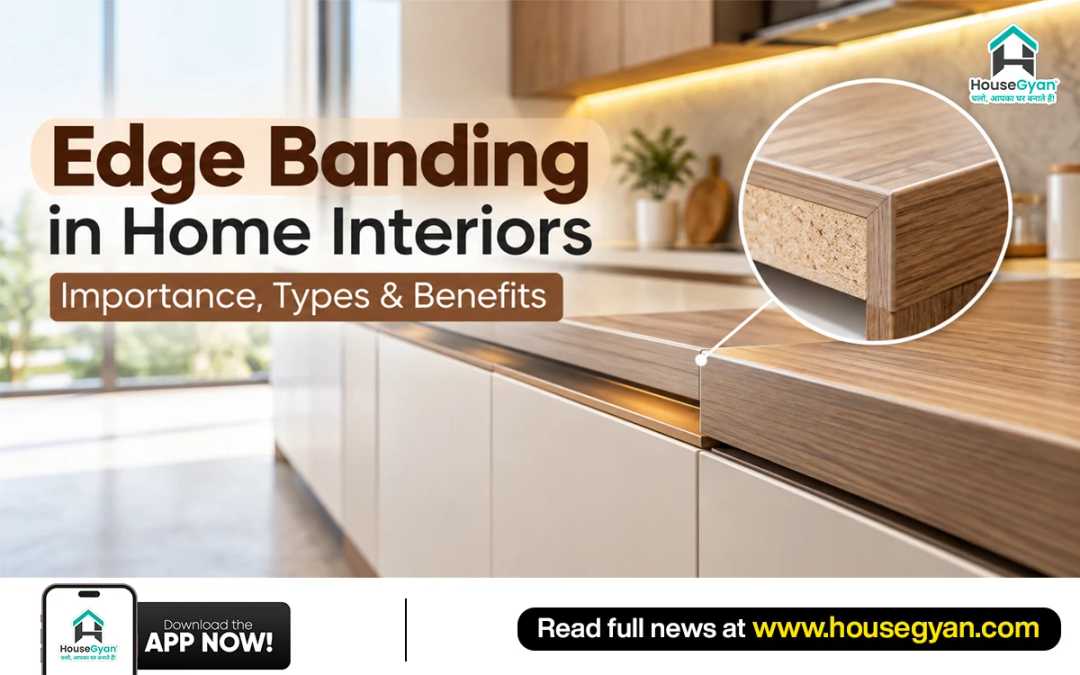
Edge banding applied to the interior of homes is used to cover exposed edges of MDF, plywood, and particle board and provides a clean finish to furniture. Applied in the kitchen, furniture, wardrobes, and storage BTUs, edge banding for furniture enhances look, longevity, and resistance to daily damage.
What Is Edge Banding?
Edge banding is a narrow strip that is attached to the bare edges of the furniture boards. It covers raw edges, protects them from wear, and gives them a smooth finish.
Furniture edge banding comes in different materials, colors, finishes, and thicknesses, making it easy to match different furniture designs.
Why Is Edge Banding Important in Home Interiors?
-
Protects Exposed Board Edges - Edge Banding prevents chipping, cracking, dust, and moisture of the raw board edges.
-
Improves Furniture Appearance - It provides furniture with a smooth and clean surface and may be of the same color and texture as the board.
-
Helps Prevent Moisture Damage - Edge banding minimizes entries of moisture and prevents swelling, particularly in kitchens.
-
Enhances Durability - Among the most significant edge banding benefits is an increased ability to resist scratches, impacts, and day-to-day wear.
-
Improves Safety and Comfort - It covers rough edges, making furniture smoother, safer, and more comfortable to use.
Types of Edge Banding
The various materials provide varying degrees of durability, appearance, and cost. Edge banding types are:
1. PVC Edge Banding
The importance of PVC edge banding is due to its strength, flexibility, and the variety of colors and finishes. It can be applied in kitchens, wardrobes, and storage furniture.
2. ABS Edge Banding
ABS edge banding is composed of acrylonitrile butadiene styrene. It gives high impact resistance and is clean. It is most prevalently applied in contemporary furniture where stability and looks matter.
3. Acrylic Edge Banding
Acrylic edge banding provides a glossy and contemporary appearance. It can be used in interiors with high-gloss panels and modern finishes.
4. Melamine Edge Banding
Melamine edge banding mostly applies to melamine-faced boards. It offers a uniform look and is a viable choice where furniture needs both a cost and a finish.
5. Wood Veneer Edge Banding
Wood veneer edge banding entails laying a thin sheet of natural wood. It is best on furniture in which a natural timber look is desired and is especially compatible with wooden or wood-like surfaces.
Read More: How to Move Heavy Furniture Easily at Home - Best Tools & Rollers Guide.
Edge Banding Thickness: What Does It Mean?
Edge banding thickness of the strips used on the edges of furniture. Selectable variants are 0.4 mm, 1 mm, and 2 mm.
Slimmer bands are favored as decorative, whereas heavier bands provide superior protection against impacts and tears. For high-use furniture like kitchen cabinets and wardrobes, choose the thickness based on durability and usage needs.
Where Is Edge Banding Used in Home Interiors?
Edge banding for furniture applies to various sections of a home, including:
-
Modular kitchen cabinets: shields the edges of the cabinet against frequent use and dampness.
-
Wardrobes: Forms a complete finish on shutters, shelves, and panels.
-
TV units and wall-mounted cabinets: Helps have a clean and finished look.
-
Study tables and desks: Shields edges in regular contact and usage.
-
Shelves and storage units: Damage to exposed board edges is minimized, and the overall finish is enhanced.
Benefits of Edge Banding in Interior Design
The significant edge banding benefits are:
-
Shields bare edges of boards.
-
Minimizes surface damage and chipping.
-
Helps restrict passage of moisture.
-
Improves furniture durability
-
Gives a refined and finished look.
-
Makes edges smoother to touch.
-
Gives furniture manufacturers the ability to align colors and textures.
-
Holds a tidier and more coherent interior design.
PVC vs ABS vs Acrylic vs Melamine vs Veneer
How to Choose the Right Edge Banding for Your Home
When choosing furniture edge banding, consider the following factors:
-
Location: Select resistant to moisture in kitchens and utility spaces.
-
Usage: Thicker and stronger edge bands can be needed on high-use furniture.
-
Appearance: Match the color, grain, and finish with the furniture board.
-
Durability: Consider resistance to impact, scratches, and everyday wear.
-
Budget: Compare material, thickness, and installation before deciding.
-
Furniture material: Make certain that the edge band is compatible with MDF, plywood, particle board, or the panel that has been chosen.
Conclusion
Edge banding in home interiors to cover furniture edges, enhance the look and add longevity. PVC edge banding, ABS edge banding, acrylic edge banding, melamine edge banding, and wood veneer edge banding have various finishes and advantages; select edge banding for furniture on the basis of application, design, and cost.
Why Housegyan?
Housegyan has basic and useful advice on edge banding, furniture materials, and home interiors as a guide to making informed design decisions.
FAQs
1. What is edge banding in home interiors?
Edge banding is applied to provide protection to the exposed edges of MDF, plywood, or particle board and enhances the finish.
2. Why is edge banding important for furniture?
It shields edges against the elements of moisture and daily wear and tear and gives them a smooth finish.
3. What are the different types of edge banding?
Types of common edge banding are PVC, ABS, acrylic, melamine, and wood veneer.
4. Which edge banding is best for modular kitchens?
PVC and ABS edge banding are trendy because they are durable and resistant to water.
5. What is the difference between PVC and ABS edge banding?
PVC is soft and flexible, and ABS is impact resistant.
6. Is edge banding necessary for MDF furniture?
Yes. It covers naked MDF sides against moisture, shock, and damage.