
Table Of Content ☰
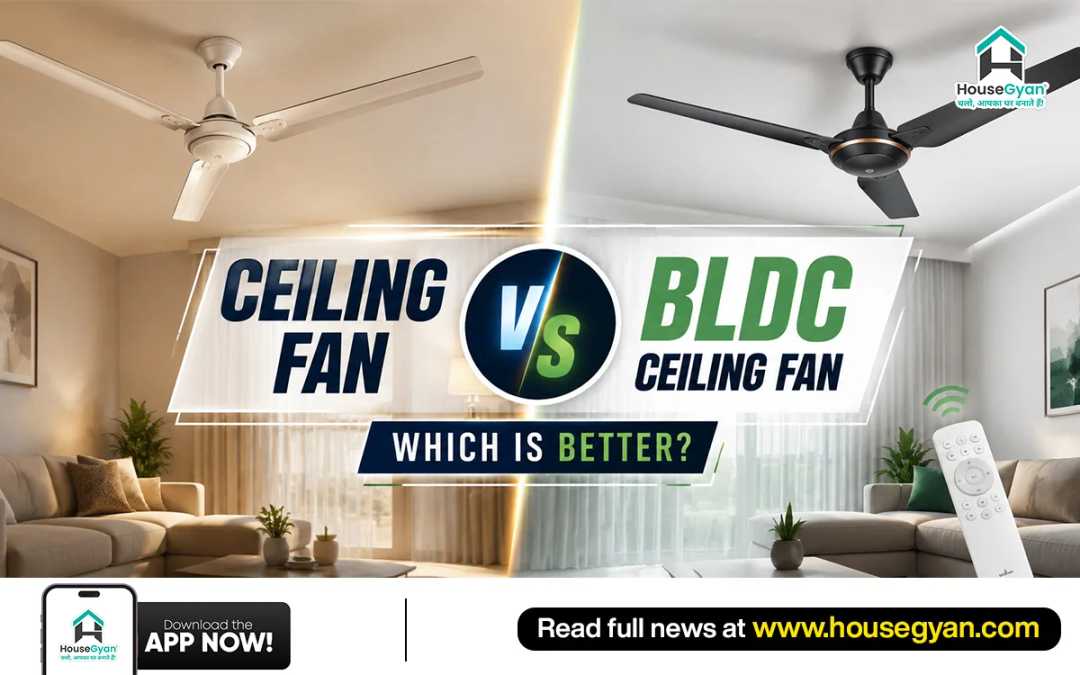
Choosing between a conventional ceiling fan and a BLDC ceiling fan is a common dilemma. With electricity bills rising, this ceiling fan comparison matters more than ever. Understanding the difference between a normal ceiling fan and a BLDC fan can help you make a smarter decision.
What Is a Conventional Ceiling Fan?
A conventional ceiling fan uses an induction motor, a technology that has powered homes for decades. These fans are widely available, inexpensive, and simple to install. However, induction motors are less efficient; much of the electricity is lost as heat. Most normal ceiling fans consume 70–80 watts and offer limited speed control via a fixed-step regulator.
Advantages
-
Lower upfront price
-
widely available with easy replacement parts
-
simple installation
-
wide variety of designs
-
and no electronic components to complicate repairs
Read More: Top 10 Best Ceiling Fans in India (2026).
What Is a BLDC Ceiling Fan?
A BLDC ceiling fan uses a brushless DC motor, a more advanced, energy-efficient technology. A BLDC motor fan converts almost all its electrical energy into motion, cutting power consumption to 25–35 watts. These fans usually include remote controls, multiple speeds, and smart features like app connectivity and voice control.
Advantages
-
Lower power consumption
-
quieter operation
-
stepless speed control
-
remote included as standard
-
better suited to inverter/solar backup
-
longer lifespan
-
and smart scheduling in premium models.
Read More: Top 10 BLDC Fan Brands in India 2026.
Ceiling Fan vs BLDC Ceiling Fan: Comparison Table
Key Differences Between Ceiling Fan and BLDC Ceiling Fan
1. Motor Technology
The core of any bldc fan vs normal fan debate is motor design. Conventional fans use induction motors needing a capacitor to run, causing energy loss. BLDC fans use electronically commutated motors controlled by a microcontroller, giving higher efficiency and finer speed control.
2. Power Consumption
Ceiling fan power consumption is where BLDC shines. A 75-watt fan running 10 hours daily consumes far more than a 30-watt BLDC fan over the same period, especially noticeable with multiple fans running.
3. Electricity Bill Savings
An energy efficient ceiling fan like a BLDC model can substantially cut monthly bills, particularly in regions with long summers and extended fan usage.
4. Performance and Air Delivery
A common myth is that lower power means weaker airflow. Most BLDC fans use aerodynamic blades that maintain or improve air delivery despite using less electricity.
5. Noise Levels
BLDC motors run smoother and quieter than induction motors, which can hum at higher speeds, making BLDC fans ideal for bedrooms and quiet spaces.
6. Smart Controls and Convenience
Most smart ceiling fan models are BLDC-based, offering remote operation, scheduling, and home automation integration that normal fans typically lack.
7. Initial Cost vs Long-Term Savings
A normal ceiling fan is cheaper upfront, but a BLDC fan often pays for itself through electricity savings within one to two years, making it economical long-term.
Which Fan Should You Choose?
Budget Buyers - A conventional ceiling fan is practical if the lowest upfront cost is the priority.
Energy Savings - A BLDC ceiling fan wins here, offering strong electricity-saving fan performance over time.
Smart Homes - BLDC fans are the natural choice since smart ceiling fan features are largely exclusive to this category.
Long-Term Use - BLDC's savings and durability often outweigh its higher purchase price for long-term homeowners.
Rental Properties - Conventional fans suit short-term affordability needs since the investment doesn't need years to pay off.
Common Mistakes to Avoid When Buying a Ceiling Fan
Many buyers focus only on price and ignore long-term running costs. Others skip checking room size and sweep measurements, resulting in poor airflow, or overlook star ratings and BEE labels. Some assume all BLDC fans perform identically without comparing specs, and many underestimate the convenience of remote and smart features.
Conclusion
Both fan types have their place. If low upfront cost matters most, a normal ceiling fan works well. But for an energy efficient ceiling fan that saves electricity and adds smart convenience, a BLDC ceiling fan is the better long-term investment.
FAQs
1. What is the difference between a ceiling fan and a BLDC ceiling fan?
A conventional fan uses an induction motor, while a BLDC ceiling fan uses a brushless DC motor that consumes far less power and runs quieter.
2. Do BLDC ceiling fans really save electricity?
Yes, BLDC fans typically use 25–35 watts versus 70–80 watts for normal fans, cutting monthly electricity bills.
3. Are BLDC ceiling fans worth the higher price?
For most users, yes the higher cost is usually offset by savings within one to two years.
4. Which is better for inverter use: a normal fan or a BLDC fan?
BLDC fans are better for inverter backup since their low power draw lets them run longer during outages.
5. How long does a BLDC ceiling fan typically last?
BLDC fans often last as long as or longer than conventional fans due to reduced heat and mechanical stress.
6. Which type of ceiling fan is best for Indian homes in 2026?
Given rising electricity costs and smart home adoption, BLDC ceiling fans are increasingly the preferred choice in 2026.