
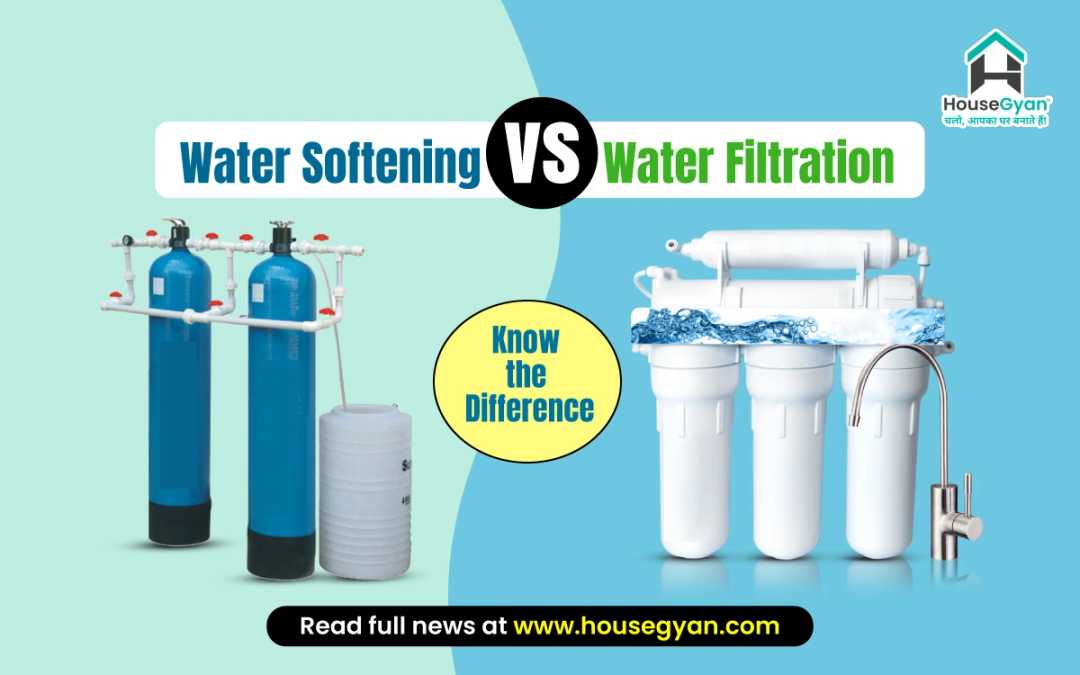
When it comes to clean water in your home, people often get confused between water softening and water filtration. Both processes improve water quality but serve different purposes. Understanding their differences helps you choose the right system for your needs.
Let’s dive deeper!
What is Water Softening?
Water softening is the process of removing hardness-causing minerals like calcium and magnesium from water. Hard water can cause:
Scaling on bathroom fittings, pipes, and kitchen appliances
Dry skin and hair
Poor lathering of soap and detergents
How does water softening work? A water softener typically uses a process called ion exchange, where calcium and magnesium ions are replaced by sodium or potassium ions, making water "soft."
Benefits of Water Softening:
Increases the life of your appliances
Reduces plumbing issues due to scaling
Softer skin and hair
Saves energy as soft water heats faster
Read More : Top 10 Water Softener Companies in India
What is Water Filtration?
Water filtration focuses on removing contaminants like:
Dirt, sand, and sediments
Chlorine and chemicals
Heavy metals (lead, mercury)
Bacteria, viruses, and other harmful microorganisms
There are different types of water filters like:
Carbon filters: Remove chlorine and odor
Reverse Osmosis (RO): Removes dissolved salts, heavy metals, and microbes
UV filters: Kill bacteria and viruses
Sediment filters: Remove larger particles
Benefits of Water Filtration:
Provides safe, drinkable water
Improves taste and smell
Protects against waterborne diseases
Read More: Top 10 Water Purifier Brands in India
Key Differences: Water Softening vs Water Filtration
Do You Need Both?
Yes, in many cases, both systems are used together.
Use water softeners for your entire house (showers, laundry, kitchen appliances) to prevent scaling.
Install water filters (especially RO + UV) for your drinking and cooking water to ensure purity and safety.
Which One is Right for You?
Here’s how you can decide:
Conclusion
Understanding the difference between water softening and water filtration is crucial for maintaining your home’s plumbing, appliances, and your family’s health.
HouseGyan Offering | ||
FAQs
1. What is the main difference between water softening and water filtration?
Water softening removes hardness minerals like calcium and magnesium, while water filtration removes contaminants like dirt, chemicals, and bacteria.
2. Is softened water safe to drink?
Softened water is generally safe, but it may contain added sodium. For drinking, filtration systems like RO or UV are recommended.
3. Do I need both a water softener and a water filter?
Yes, if your water is both hard and contaminated, using both systems ensures better quality for household use and safe drinking water.
4. How do I know if I have hard water?
Signs include white scaling on taps, poor soap lather, dry skin, and damage to appliances.
5. Which water filter is best for home use?
Reverse Osmosis (RO) combined with UV and carbon filters is one of the most effective options for safe drinking water.
6. Does water filtration remove hardness?
No, standard water filtration systems do not remove hardness; you need a water softener for that.
7. Is water softening expensive to maintain?
It has moderate maintenance costs, mainly due to the regular use of salt, but it helps save money by protecting appliances.