
Table Of Content ☰
- 1. Understanding Tower Fan vs Air Cooler Basics
- 2. How Each Cooling System Works
- 3. Difference Between Tower Fan and Air Cooler
- 4. Tower Fan vs Air Cooler Which Is Best for Small Rooms?
- 5. Pros and Cons of Tower Fan and Air Cooler
- 6. Performance in Different Climates
- 7. Energy Efficiency Comparison in 2026
- 8. Noise Levels: Silent Comfort or Disruption?
- 9. Maintenance Requirements
- 10. Cost Comparison
- 11. Smart Features and Technology Trends in 2026
- 12. Health and Air Quality Considerations
- 13. Conclusion: Which One Should You Buy in 2026?
- 14. Why HouseGyan?
- 15. FAQs
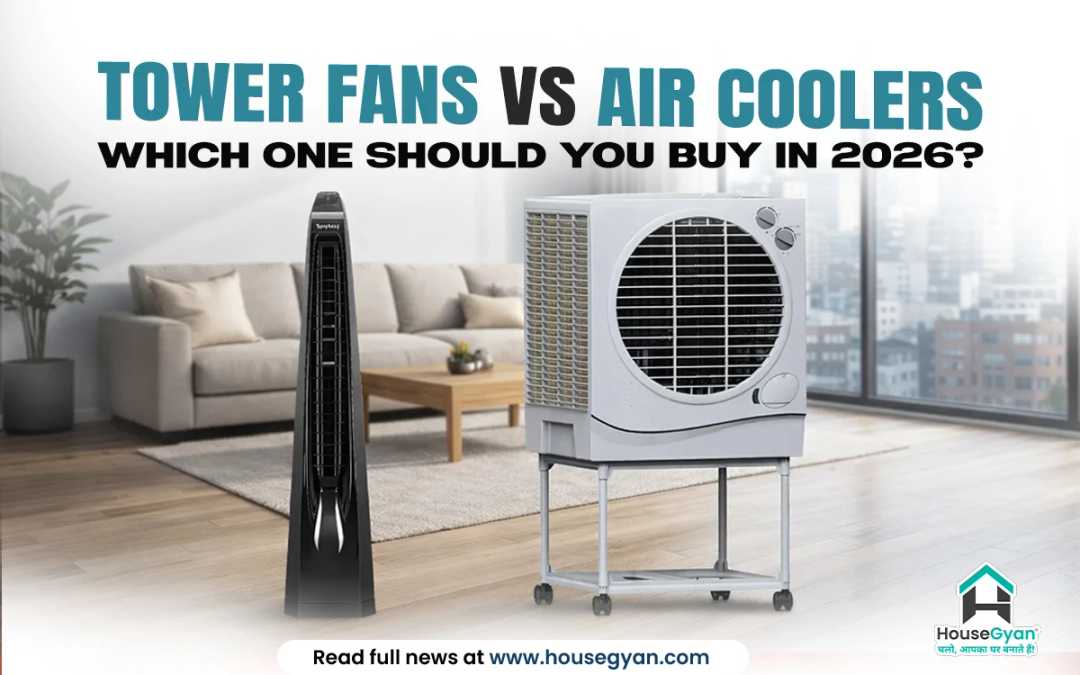
When summer heat hits hard, the debate around tower fan vs air cooler becomes more relevant than ever. In 2026, energy efficiency, smart features, and comfort matter more than just price. But here’s the big question — tower fan vs air cooler which is best for your needs?
Both appliances promise relief from heat, yet they work in very different ways. Understanding the difference between tower fan and air cooler can save you money, electricity, and frustration.
Understanding Tower Fan vs Air Cooler Basics
What Is a Tower Fan?
A tower fan is a slim, vertical fan designed to circulate air efficiently in a room. Unlike traditional pedestal fans, a cooling tower fan uses a cylindrical airflow system and oscillation to distribute air evenly. Tower fans do not lower room temperature. Instead, they move air to create a cooling sensation on your skin through increased evaporation of sweat. An air cooler uses water evaporation to cool air before pushing it into a room. It works best in dry climates and can reduce room temperature by several degrees. Unlike a tower fan, it actually cools the air rather than just circulating it. Understanding the working mechanism helps clarify the difference between tower fan and air cooler. A cooling tower fan: Pulls air from the room Passes it through internal blades Circulates it outward with oscillation Some modern models include: Ionizers Remote control Smart home integration But remember — it does not use water or refrigerants. An air cooler: Pulls hot air through wet cooling pads Uses water evaporation to lower air temperature Blows cooled air into the room Read More: Discover the complete guide to the top tower fan brands in India and find the perfect option for your home. Feature Tower Fan Air Cooler Cooling Method Air circulation Water evaporation Temperature Reduction No Yes Humidity Increase No Yes Power Usage Low Moderate Maintenance Minimal Regular cleaning Best For Humid areas Dry climates Cooling Power If you want actual temperature drop, the air cooler wins. A tower fan only creates airflow. Humidity Impact Air coolers increase humidity. In already humid regions, this can make the room feel sticky. In such areas, a tower fan is often the better choice. Power Consumption Tower fans are more energy-efficient. They typically use 40–100 watts, while air coolers can consume 100–300 watts. Portability & Space Tower fans are slimmer and easier to move. Air coolers are bulkier due to the water tank. This is one of the most searched questions: tower fan vs air cooler which is best for small spaces? Apartment Living Considerations If you live in a humid apartment: Choose a tower fan It’s compact No water refilling needed Studio & Office Spaces For dry climates and slightly larger rooms: An air cooler performs better It can noticeably lower temperature Read More: Check out the detailed guide on the best air cooler brands in India to choose the right cooling solution for your home. Tower Fan Pros Energy efficient Compact Low maintenance Ideal for humid climates Tower Fan Cons Does not reduce temperature Air Cooler Pros Lowers room temperature More powerful cooling Affordable alternative to AC Air Cooler Cons Needs regular maintenance Adds humidity Bulkier design Climate plays a huge role in choosing between tower fan and air cooler. Dry Climate Air coolers perform exceptionally well in dry regions. The evaporation process is more effective when humidity is low. Humid Climate In humid weather, air coolers struggle. A tower fan works better because it does not add moisture to the air. In 2026, consumers are focused on sustainability. Tower fans: Consume less electricity Lower running cost Eco-friendly choice Air coolers: Still more efficient than AC Higher energy usage than tower fans If you prioritize electricity savings, tower fans have the edge. Most modern tower fans are quieter. Air coolers can be noisy due to: Water pump Large fan blades For bedrooms or offices, a tower fan offers quieter operation. Tower Fan: Occasional dust cleaning No water tank Low maintenance Air Cooler: Regular water refilling Cleaning cooling pads Preventing mold growth Maintenance is a key difference between tower fan and air cooler that many buyers overlook. HouseGyan Offering Category Tower Fan Air Cooler Initial Cost Lower Moderate Running Cost Very Low Low Maintenance Cost Minimal Moderate If budget is tight, tower fans are more affordable long-term. Both appliances now offer: Remote controls Timer settings Sleep modes Wi-Fi connectivity However, premium tower fans are leading in smart integrations. Air coolers can improve dryness in arid areas. But in humid zones, they may encourage mold if not cleaned properly. Tower fans do not alter humidity levels, making them safer for allergy-prone individuals. Choosing between tower fan vs air cooler depends on your climate, room size, and budget. If you live in a humid area → Buy a tower fan. If you live in a dry climate → Choose an air cooler. If energy savings matter most → Tower fan wins. If real temperature reduction is needed → Air cooler is better. At the end of the day, both appliances serve different needs. By understanding the difference between tower fan and air cooler, you can confidently decide what works best for your home. HouseGyan is a trusted platform for home improvement tips, honest product reviews, and expert buying guides. It provides well-researched and easy-to-understand content that helps homeowners make smart decisions. From comparing appliances like tower fans and air coolers to sharing practical home design ideas, HouseGyan focuses on clear advice and updated information. Whether you're upgrading your home or choosing new appliances, HouseGyan offers reliable guidance every step of the way. The main difference between tower fan and air cooler is that a tower fan circulates air, while an air cooler uses water evaporation to lower temperature. In humid regions, tower fans are usually better because air coolers increase humidity. Yes, air coolers generally consume more electricity than tower fans. No. A cooling tower fan cannot reduce room temperature like an air cooler. Tower fans are easier to maintain compared to air coolers. Tower fans are more budget-friendly in terms of energy consumption and maintenance.What Is an Air Cooler?
How Each Cooling System Works
Working Mechanism of a Cooling Tower Fan
Working Mechanism of an Air Cooler
Difference Between Tower Fan and Air Cooler
Tower Fan vs Air Cooler Which Is Best for Small Rooms?
Pros and Cons of Tower Fan and Air Cooler
Performance in Different Climates
Energy Efficiency Comparison in 2026
Noise Levels: Silent Comfort or Disruption?
Maintenance Requirements
Cost Comparison
Smart Features and Technology Trends in 2026
Health and Air Quality Considerations
Conclusion: Which One Should You Buy in 2026?
Why HouseGyan?
FAQs
1. What is the main difference between tower fan and air cooler?
2. Tower fan vs air cooler which is best for humid areas?
3. Does an air cooler consume more electricity than a tower fan?
4. Can a cooling tower fan replace an air cooler?
5. Is maintenance easier for tower fan and air cooler?
6. Which is more budget-friendly in 2026?