
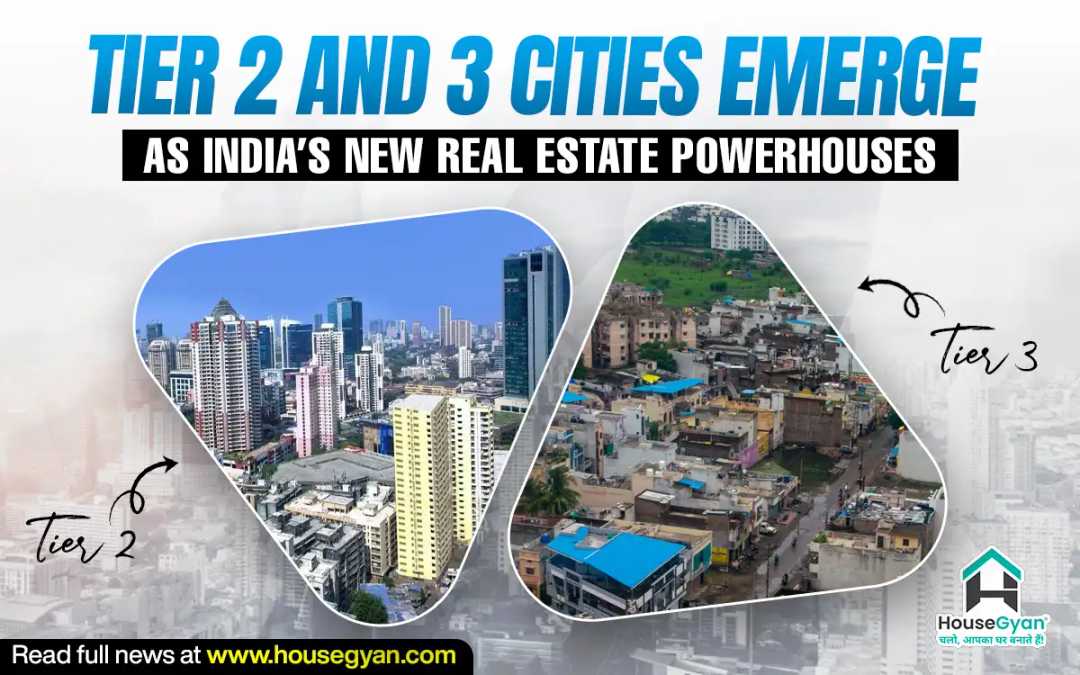
Smaller Cities, Bigger Dreams
A silent transformation is underway in India’s real estate sector. Once overshadowed by metros, Tier 2 and Tier 3 cities are now stepping into the spotlight. Cities like Lucknow, Jaipur, and other tier 2 & 3 cities are becoming real estate hotspots, with Lucknow and Jaipur leading the charge in land acquisition and housing demand.
According to recent data from Anarock Group and media reports, nearly 44% of land acquisitions in 2023 were concentrated in Tier 2 and Tier 3 cities, signalling a shift in developer focus and buyer interest.
Why the Sudden Shift?
Better Return on Investment (ROI)
One of the biggest drivers behind this migration towards Tier 2 and 3 cities is the potential for higher returns on investment. In metros, property prices have reached saturation, leaving limited scope for appreciation. On the other hand, properties in emerging cities are still affordably priced and show immense growth potential — especially as infrastructure rapidly improves.
Early-stage investments in these markets not only cost less but are also likely to deliver stronger long-term capital gains. This makes them highly attractive for both first-time buyers and seasoned investors.
Other Key Reasons for the Shift
Affordable Land Prices: Compared to metro cities, the cost of land and development is significantly lower, making it more feasible for developers to launch large-scale projects.
Improved Infrastructure: Government-led smart city initiatives and infrastructure upgrades like highways, metro expansions, and airports have enhanced connectivity and liveability.
Remote Work Culture: The post-pandemic work-from-home trend has allowed professionals to relocate from expensive metros to more affordable hometowns without compromising on job opportunities.
Rising Demand for Quality Living: With growing disposable incomes and aspirations, residents in Tier 2 and 3 cities are now seeking premium housing, better amenities, and modern lifestyles.
Cities to Watch: Lucknow & Jaipur Take the Lead
Among the cities making waves, Lucknow and Jaipur have shown exponential growth. Both have recorded high land acquisition activity, with strong buyer demand and infrastructural development fuelling the boom.
Lucknow: With a surge in IT, education, and retail sectors, the city has witnessed a robust demand for residential and commercial spaces.
Jaipur: Often dubbed as a tourism hub, Jaipur is fast becoming a business destination with growing demand in plotted developments and mid-income housing.
What This Means for Investors
The rise of these cities is opening up lucrative investment opportunities:
Early investments in these regions could yield higher returns as development scales up.
The demand for affordable housing, gated communities, and integrated townships is on the rise.
With more brands and developers entering these markets, competition is expected to grow, offering buyers more choices.
Conclusion: A New Era in Indian Real Estate
India’s real estate landscape is undergoing a strategic shift, and it's moving beyond the metros. Tier 2 and Tier 3 cities are no longer just satellite hubs; they are becoming independent economic and residential zones that cater to the aspirations of New India.
For developers, investors, and homebuyers, the message is clear: the future of Indian real estate is now rooted in its smaller cities.
FAQs
What are Tier 2 and Tier 3 cities in India?
Tier 2 and Tier 3 cities are smaller urban areas with growing infrastructure, lower population density, and increasing economic opportunities compared to metro cities.
Why are Tier 2 and 3 cities becoming real estate hotspots?
They offer affordable property prices, better ROI potential, and improved infrastructure, making them attractive for both buyers and investors.
Which cities are leading this real estate growth?
Cities like Lucknow and Jaipur are leading due to strong demand and rapid development.
Is investing in smaller cities better than metro cities?
In many cases, yes. Smaller cities offer lower entry costs and higher long-term appreciation compared to saturated metro markets.
How has remote work influenced this trend?
Remote work allows people to live in affordable cities while keeping their jobs, increasing housing demand in Tier 2 and 3 locations.
What types of properties are in demand in these cities?
Affordable housing, plotted developments, gated communities, and integrated townships are in high demand.
Is it the right time to invest in Tier 2 and Tier 3 cities?
Yes, early-stage investments can offer strong future returns as infrastructure and demand continue to grow.