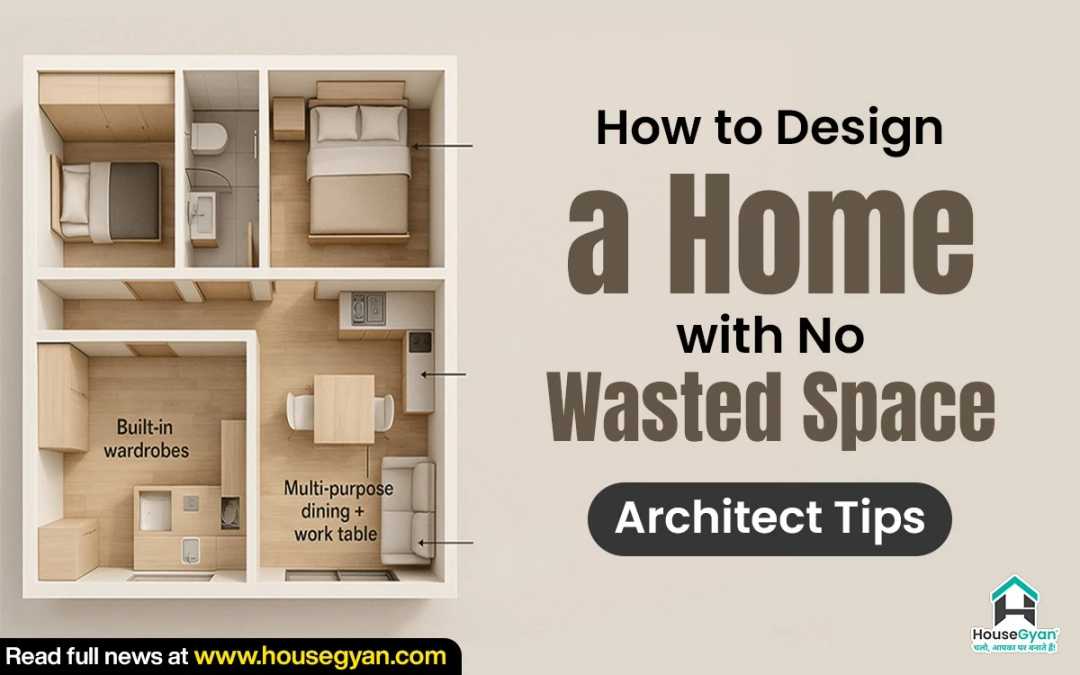
Designing a home today isn’t just about beauty; it’s about making every square foot count. With rising construction prices, smaller lot sizes, and growing demand for smart layouts, homeowners are actively seeking small home design ideas and practical solutions. Learning How to Design a Home with No Wasted Space: Architect Tips gives you a major advantage when building or remodeling. These architect-backed strategies help you maximize function, boost comfort, and create a space saving home that simply works better. Homes with no wasted space feel bigger, flow better, and offer flexible use for the future. Whether you’re working with small house floor plans or a larger property, space saving home design ensures every area serves a purpose. By focusing on smart space planning, multifunctional rooms, and thoughtful organization, you can achieve a clutter-free lifestyle that remains warm, practical, and visually appealing. Efficient design isn’t about making your house small; it’s about thoughtful home design plans that ensure every square foot matters. Modern home interior design ideas prove that comfort and minimalist living can go hand in hand. Architects today emphasize space efficient homes because they lead to simpler construction, lower energy use, and higher functionality. A well-planned home feels intuitive and effortless, allowing seamless transitions between rooms and more meaningful usage of your living areas. Older homes may suffer from: Oversized hallways Dead corners Poor furniture placement Rooms not having a very well-defined function. Identifying these issues early prevents expensive remodels and supports better long-term usability. Functional zoning groups related spaces together—keeping noise away from sleeping areas, placing storage near entry points, and aligning living areas in a logical flow. This concept is especially crucial in small house design, where every inch needs clarity and purpose. Good circulation eliminates winding hallways and unnecessarily wide walkways. Widths of 36–42 inches are common targets to avoid wasted space without sacrificing comfort. Multi-use rooms are a key strategy for how to save space in home planning. Think dining area + home office, guest room + workout zone, or media room + study corner. Dual-purpose spaces increase the value of each square foot. Built-ins transform unused pockets into functional assets—from window seating to wall-to-wall shelving. They’re a top recommendation in space saving home projects and small entryway ideas, turning narrow or overlooked spaces into storage powerhouses. Architects recommend that: Drop-leaf tables murphy beds Modular sofas Ottomans with storage inside These pieces let your home easily convert for different activities. Walls are valuable real estate. High shelving, tall cabinets, and mounted organizers can dramatically increase storage without expanding your footprint. Arrange furniture to promote conversation, not clutter. In small home design ideas, the living room should revolve around a focal point and avoid bulky pieces that block circulation. The classic work triangle (sink, stove, refrigerator) improves movement. Add ceiling-height cabinetry, toe-kick drawers, and pull-out shelves for smart space saving home design. Bedrooms can accommodate reading nooks, compact desks, or exercise spaces if planned well. Custom wardrobes eliminate the need for bulky dressers. Floating vanities, wall niches, and pocket doors let small bathrooms feel airy yet functional. Sliding Systems and Pocket Doors Under-stair shelving or storage drawers Multi-level platforms for hidden utility areas These attributes support efficiency in small house design, furthering into larger layouts. Smaller houses benefit greatly from smart layouts and multi-use rooms, whereas large homes risk having underused zones. Whether one is designing for compact living or the most luxurious of spaces, efficient planning ensures not one square foot is wasted. Energy consumption reduced Reduced material usage Reduced environmental impact Saving space means money and sense for both wallet and planet. Efficient planning saves money on: Materials Labour Long-term utility bills Maintenance The fewer unnecessary spaces you build, the less you'll pay to heat, cool, and keep up. Examples of 3D software platforms include SketchUp, Revit, and Chief Architect. Laser-measuring devices for accurate placement Digital Scanning to Avoid Mistakes in Constructions Over-crowding the layouts with too much furniture Not considering the natural flow of light Creating rooms that do not show a specific functional usage. Natural light makes rooms appear larger, much more inviting, and energy-efficient. A family of four redesigned a 900 sq. ft. home using lofted sleeping areas Inset dining bench, sliding-panel office, floor-to-ceiling kitchen cabinetry The result was a warm, modern space where every inch was used for something useful, a real-life example of space-efficient homes. HouseGyan Offering 1. How do I start planning a small house design? 2. Are small house floor plans cost effective? 3. What colors make small spaces look bigger? 4. Can a space efficient home be stylish? 5. Which entryway ideas save the most space? 6. How to save space in home on a budget?Introduction to Efficient Home Design
Understanding the idea of no-waste home layout
Why Modern Architects Take Space Efficiency Seriously
Common reasons for wasted space in traditional floor plans include:
Core Principles of Designing a Home without Wasting Any Space
The Rule of Functional Zoning
Intelligent Circulation and Traffic Flow
Multi-Purpose Room Strategies
Architect Tips for Highly Functioning Spaces
Custom built-ins to maximize storage
Flexible Furniture Selection
Vertical Space Optimization Techniques
Waste-free Designs for Major Rooms
Living Room: Minimalist Layouts That Can Still Feel Cozy
Kitchen: Ergonomic Work Triangle + Hidden Storage
Bedroom: The dual-purpose zone and smart closets
Bathroom: Compact yet Comfortable Design Tactics
Space-Saving Architectural Features
Small House vs. Big House: Which One is More Economical in Space?
Benefits of Eliminating Wasted Space in Sustainable Design
Cost Savings Resulting from No-Waste Design Principles
Top Industry Tools and Technology for Space Planning
Real Architect Advice: Mistakes to Avoid
Case Study: Tiny Home with No Space Wasted
Frequently Asked Questions (FAQs)
Begin by assessing lifestyle needs: sleeping, cooking, working, and entertaining.
Yes, they reduce construction, labor, and electricity usage.
Whites, light grays, creams, and pastels open spaces visually.
Absolutely. Minimalist interiors and modern furniture elevate aesthetics.
Vertical cabinets, hooks, and bench storage maximize small entryways.
Declutter, use DIY shelves, and repurpose furniture rather than buying new.

9th, Dec, 2025
By HouseGyanHow to Design a Home with No Wasted Space: Architect Tips
House Gyan all services
Loading...
The information contained on Housegyan.com is provided for general informational purposes only. While we strive to ensure that the content on our website is accurate and current, we make no warranties or representations of any kind, express or implied, about the completeness, accuracy, reliability, suitability, or availability with respect to the website or the information, products, services, or related graphics contained on the website for any purpose. Housegyan.com will not be liable for any loss or damage including, without limitation, indirect or consequential loss or damage, or any loss or damage whatsoever arising from loss of data or profits arising out of, or in connection with, the use of this website.
Third party logos and marks are registered trademarks of their respective owners. All rights reserved.
By Rapsa Group










Download Our App