

Table Of Content ☰
One of a family's main turning points is moving into a new house. Hinduism emphasises bringing divine blessings, positive energy, and wealth into your surroundings as much as occupying a new place. The Griha Pravesh Pooja finds expression here. Let's understand the Housewarming ceremony before you start living in your own house.
Introduction to Griha Pravesh Pooja or Housewarming Ceremony
Griha Pravesh Pooja is a holy housewarming ritual that ensures your new residence is free from negative energy and bursting with good fortune. It is set up before we move into the house to generate good energy in it.
It is performed on a subh muhurat chosen by a priest ideally. Important ceremonies assuring the occupant's peace, health, and riches are Vastu Shanti, Navagriha Shanti, and Ganesh Pooja. Used throughout these events, Pooja samagri is essential for the complete setting.
Significance of Pooja Samagri in Griha Pravesh Pooja
A powerful ritual needs the right ingredients! Every pooja samagri in Griha Pravesh holds deep spiritual importance. A few of the key pooja items are:
Kalash – Symbolises prosperity and abundance.
Coconut – Represents purity and divine blessings.
Turmeric & Kumkum – Bring positivity and good luck.
Rice & Grains – Signify fertility, prosperity, and nourishment.
Flowers & Mango Leaves – Attract good vibes and fresh energy.
Camphor & Incense Sticks – Cleanse the space and invite divine presence.
Panchamrit (Milk, Honey, Sugar, Ghee, and Curd) – Used for purification and blessings.
Every item in a housewarming ceremony is essential in making sure your new house is a haven of peace, happiness, and divine grace rather than just a house!
Types of Griha Pravesh Pooja
Three main forms of Griha Pravesh Pooja, suited for a particular situation, are:
Apoorva Griha Pravesh Pooja (Newly Constructed Home)
Especially presented to newly constructed homes is Apoorva Griha Pravesh. The housewarming ceremony seeks to clean the space and establish a spiritual environment suited for life. Starting their new road in the recently built house also means saying prayers to satisfy the land and the gods, thereby obtaining their blessings.
Sapoorva Griha Pravesh Pooja (Re-Entry into an Existing Home)
It happens when a family re-enters an existing house. Aimed at balancing the energy in the house based on Vastu Shastra ideas, the Sapoorva griha pravesh is basic to this procedure. This rite is meant to bring the house into harmony with good cosmic energies, therefore ensuring the welfare and wealth of its occupants.
Dwandwah Griha Pravesh Pooja (Re-Entry After Renovation)
Re-entering a house after substantial renovations, rebuilding, or a protracted absence produces this kind of Griha Pravesh. Believed to revitalise the flow of positive energy and remove any stagnation coming from the empty period is the Sapoorva Griha Pravesh.
Read More: Best Griha Pravesh Muhurat in 2025: Nakshatra and Month Wise
Complete Checklist for Griha Pravesh Pooja Samagri
A well-prepared Griha Pravesh pooja or housewarming ceremony guarantees that all rites are carried out flawlessly and contributes to the creation of a lucky and spiritually inspiring environment. The following is the complete list of things you will need to ensure your Griha Pravesh ceremony goes off well:
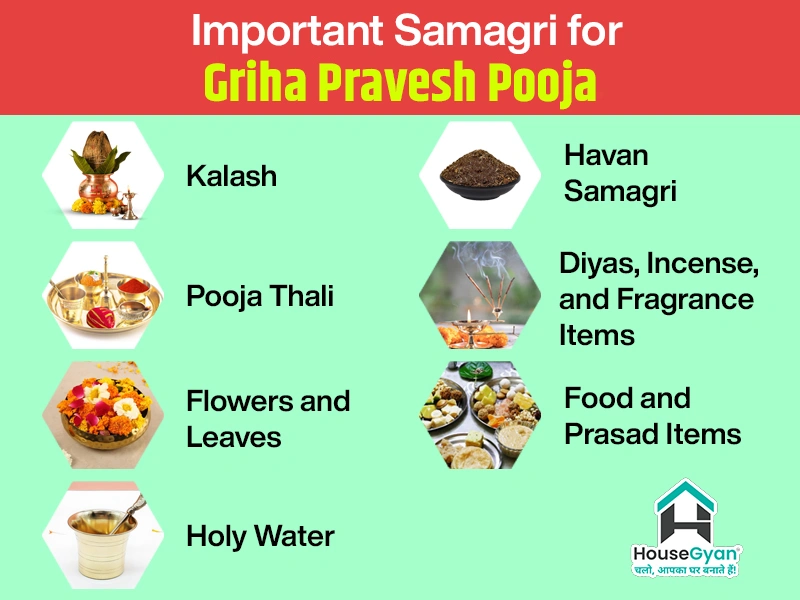
Sacred Items for Kalash Sthapana
A copper or silver pot filled with water, the Kalash (sacred pot) represents the presence of the gods. It is placed near the altar or entrance, or the pooja spot.
Fresh mango leaves are used to decorate the Kalash and are supposed to draw good fortune and vitality.
A coconut is placed atop the Kalash, which stands for fertility, purity, and divine blessings.
In several ceremonies, rice or wheat grains are used below the Kalash as a fertility and abundance symbol.
Many people put a kumkum Swastik on the Kalash to bring good fortune.
Pooja Thali Essentials
Pooja thali essentials for the Housewarming Ceremony include the following items that ensure a blessed and smooth celebration.
Kumkum, Haldi & Chandan – For tilak and rituals
Akshat (Rice Grains) – Symbol of prosperity
Flowers & Garland – For offering to deities
Dhoop, Agarbatti & Camphor – For purification and divine presence
Panchamrit (Milk, Honey, Sugar, Ghee, Curd) – Used as prasad and for bathing the idols.
Betel Leaves & Nuts – Auspicious offering
Diya – Represents light and positivity
Sacred Thread (Mauli) – For tying on wrists and Kalash
Flowers and Leaves for Decoration
In a housewarming ceremony, flowers and leaves stand for purity, hope, and heavenly benefits. While marigolds, roses, and lotuses draw wealth and happiness, mangoes guard off negativity. Their scent cleans the space and generates a calm environment.
Holy Water and Offerings
Sprinkling holy water (Ganga Jal) around the house is a purifying custom that removes any contaminants from the surroundings.
Havan Samagri and Ingredients
A Havan during Griha Pravesh cleans the house, releases bad energy, and calls for divine benefits. Driven by herbs and ghee, the holy fire improves positivity, tranquillity, and alignment of the room with spiritual vibrations.
It guarantees harmony, prosperity, and well-being for the occupants. While herbs and dry fruits nourish the fire with divine energy, essential components, including mango wood, cow dung cakes, camphor, and ghee, produce a strong aura.
Diyas, Incense, and Fragrance Items
Light oil lamps or diyas all over the house to ban darkness and draw positive energy. Diya represents knowledge, innocence, and wealth. Burn incense sticks to clean the surroundings and produce a fragrant environment that the gods would find appealing. Agarbatti or dhoopbatti is considered to purify the area of any negativity and bestow heavenly benefits.
Food and Prasad Items
Both as a way to present your blessings to guests and as an offering to the gods, prasad is crucial in the housewarming ceremony. Fresh fruits—bananas, apples, pomegranates and sweets including halwa, modaks, or ladoos are used. Panchamrit, a revered mix of milk, yoghurt, honey, sugar, and ghee, is offered mainly.
Conclusion: Ensuring a Successful Griha Pravesh Pooja
If you want your new place to be filled with good vibes and blessings, a Griha Pravesh Pooja is the way to go. Sites like House Gyan can help you plan your housewarming ceremony by giving you the lowdown on lucky dates, rituals, and Vastu tips.
Picking the right Shubh Muhurat for Griha Pravesh in 2025 is key to bringing in that good fortune, so getting some expert advice can smooth things out. Sticking to the traditions and using the right pooja samagri will help you set up a sacred space full of happiness and abundance.
Kick off your new journey with the blessings and make your home a cosy spot for prosperity and peace!
Detailed List of Griha Pravesh Pooja Samagri
FAQs
1️. What is Griha Pravesh Pooja and why is it performed?
Griha Pravesh Pooja is a Hindu housewarming ritual performed before entering a new home. It is done to remove negative energy and invite blessings, peace, and prosperity into the house.
2️. What are the most important items required for Griha Pravesh Pooja?
Some essential items include Kalash, coconut, mango leaves, turmeric, kumkum, rice (akshat), flowers, diya, incense sticks, camphor, and Panchamrit. These items are used in different rituals during the ceremony.
3️. How many types of Griha Pravesh Pooja are there?
There are three main types:
Apoorva Griha Pravesh for newly built homes, Sapoorva Griha Pravesh for re-entering an existing house, and Dwandwah Griha Pravesh after renovation or long absence.
4️. Why is Kalash important in Griha Pravesh Pooja?
The Kalash represents prosperity, purity, and divine presence. It is usually filled with water, decorated with mango leaves, and topped with a coconut during the ritual.
5️. Is Havan necessary during a Griha Pravesh ceremony?
Yes, many families perform a Havan during Griha Pravesh to purify the home. The sacred fire helps remove negative energy and invites positive spiritual vibrations.
6️. What food or prasad is offered during Griha Pravesh Pooja?
Common offerings include fruits, sweets like ladoos or halwa, and Panchamrit made from milk, curd, honey, sugar, and ghee. These are first offered to the deities and then distributed to guests.
7️. When should Griha Pravesh Pooja be performed?
It should be performed on a Shubh Muhurat selected according to the Hindu calendar and Vastu principles. A priest usually helps choose the most auspicious date and time.