
Table Of Content ☰
- 1. Understanding Pressure Cooking Basics
- 2. What Is an Electric Pressure Cooker?
- 3. What Is a Stovetop Pressure Cooker?
- 4. Electric vs Stovetop Pressure Cooker: Core Differences
- 5. Electric Pressure Cooker vs Stove Pressure Cooker: Which Is Safer?
- 6. Pressure Cooker Stovetop vs Electric: Taste and Texture Results
- 7. Cost Comparison: Initial and Long-Term
- 8. Cleaning and Maintenance Differences
- 9. Conclusion
- 10. Why HouseGyan?
- 11. Frequently Asked Questions (FAQs)
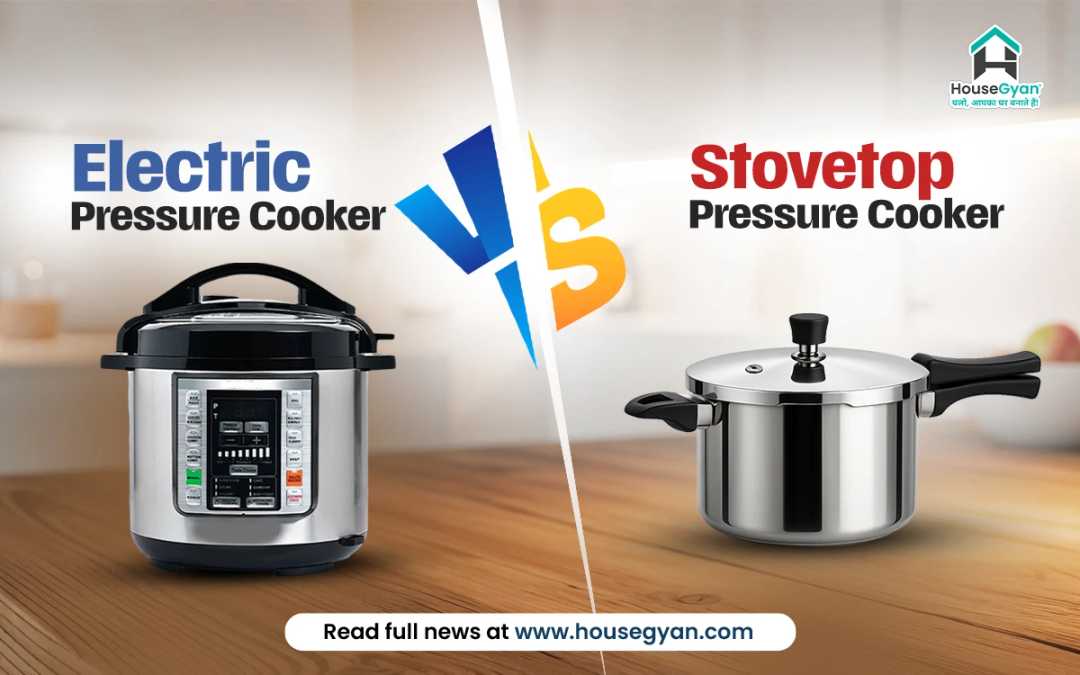
When it comes to choosing between an electric pressure cooker vs Stovetop pressure cooker, many home cooks feel confused. Both options promise fast cooking, tender meals, and energy efficiency. But which one truly fits your kitchen style?
Understanding Pressure Cooking Basics
Before diving into electric pressure cooker vs stove pressure cooker, it’s important to understand how pressure cooking works.
How Pressure Cooking Works
Pressure cookers trap steam inside a sealed pot. As steam builds up, internal pressure rises. This raises the boiling point of water, allowing food to cook much faster than traditional methods.
Why Pressure Cooking Saves Time
Because food cooks at higher temperatures under pressure, cooking time can reduce by up to 70%. That means tender beans in 20 minutes and soft meat in under an hour.
What Is an Electric Pressure Cooker?
An electric pressure cooker is a countertop appliance with built-in heating elements and automated controls. Popular models like the Instant Pot have made this option extremely popular.
Key Features of Electric Pressure Cooker
-
Digital control panel
-
Preset cooking programs
-
Automatic pressure regulation
-
Keep-warm function
-
Timer and delay start
Advantages of Electric Pressure Cooker
-
Easy to Use – Just press a button and relax.
-
Safe Operation – Multiple built-in safety mechanisms.
-
Multi-Functionality – Works as rice cooker, slow cooker, yogurt maker.
-
Hands-Off Cooking – No need to monitor heat levels.
Drawbacks of Electric Models
-
Slower to build pressure
-
Less control over pressure intensity
-
Higher upfront cost
-
Requires electricity
Read More: Explore the top 10 best electric pressure cooker brands in India.
What Is a Stovetop Pressure Cooker?
A stovetop pressure cooker is a traditional pressure pot placed directly on your stove. It relies on manual heat adjustment.
Key Features of Stovetop Pressure Cooker
-
Operates on gas or electric stove
-
Manual pressure control
-
Higher maximum pressure levels
-
Simple mechanical design
Brands like Presto and Fissler are well known for durable stovetop models.
Advantages of Stovetop Pressure Cooker
-
Faster Cooking – Reaches higher pressure.
-
Better Browning – Excellent for sautéing meats.
-
Durability – Fewer electronic components.
-
Long Lifespan – Often lasts decades.
Drawbacks of Stovetop Models
-
Requires monitoring
-
Slightly higher learning curve
-
Fewer automatic safety features
Electric vs Stovetop Pressure Cooker: Core Differences
Let’s compare stovetop vs electric pressure cooker side by side.
Cooking Speed Comparison
Stovetop models typically cook 10–15% faster because they achieve higher pressure levels (around 15 psi). Electric models usually operate at slightly lower pressure.
If speed matters most, stove top pressure cooker vs electric comparison favors stovetop.
Temperature and Pressure Control
-
Electric models regulate pressure automatically.
-
Stovetop versions require manual heat adjustment.
Experienced cooks often prefer the control offered in a pressure cooker stovetop vs electric setup.
Safety Mechanisms
Electric pressure cookers come with:
-
Lid lock systems
-
Pressure release valves
-
Automatic shut-off
Modern stovetop models are also safe but depend more on user attention.
Energy Efficiency
Electric models use built-in heating systems optimized for energy efficiency. However, stovetop cookers on induction cooktops can be equally efficient.
Durability and Lifespan
Stovetop pressure cookers generally last longer because they have fewer electronic parts that can fail.
|
HouseGyan Offering | ||
Electric Pressure Cooker vs Stove Pressure Cooker: Which Is Safer?
Safety is a big concern when choosing between electric pressure cooker vs stove pressure cooker.
Electric models are designed with beginner-friendly safety features. They automatically maintain pressure and temperature.
Stovetop pressure cookers are safe too, but they demand more attention. Modern models include multiple safety valves and locking lids.
For beginners, electric is slightly safer. For experienced cooks, both are equally secure when used properly.
Pressure Cooker Stovetop vs Electric: Taste and Texture Results
Some chefs argue that stovetop versions produce richer flavors due to higher heat levels.
Stovetop pressure cookers allow better searing and browning, enhancing taste. Electric cookers sometimes struggle with deep browning.
However, for soups, rice, beans, and stews, the difference is minimal.
Cost Comparison: Initial and Long-Term
|
Factor |
Electric Pressure Cooker |
Stovetop Pressure Cooker |
|
Initial Cost |
Higher |
Lower |
|
Maintenance |
May require repairs |
Minimal maintenance |
|
Lifespan |
5–8 years average |
10–20+ years |
If budget matters, stovetop models often win long-term value.
Cleaning and Maintenance Differences
Electric cookers have removable inner pots and lids. However, the base unit cannot be submerged in water.
Stovetop cookers are simpler to clean and often dishwasher safe (depending on manufacturer).
Conclusion
Choosing between electric pressure cooker vs Stovetop pressure cookerdepends on your cooking style, budget, and comfort level. If convenience and automation matter most, go with an electric model. If speed, durability, and control are your priorities, a stovetop pressure cooker is the better option. Both deliver delicious meals faster than traditional cooking — and that’s a win either way.
Why HouseGyan?
HouseGyan is a trusted platform for home improvement tips, product reviews, and expert buying guides. It provides well-researched, easy-to-understand content that helps homeowners make smart decisions. From kitchen appliances to home design ideas, HouseGyan focuses on practical advice, honest comparisons, and updated information. Whether you're upgrading your home or choosing the right appliances, HouseGyan offers reliable insights to guide you every step of the way.
Frequently Asked Questions (FAQs)
1. Is an electric pressure cooker safer than a stovetop pressure cooker?
Both are safe when used correctly, but electric models offer more automated safety features.
2. Which cooks faster: electric vs stovetop pressure cooker?
Stovetop pressure cookers usually cook faster due to higher pressure levels.
3. Can I brown meat better in stovetop vs electric pressure cooker?
Yes, stovetop models typically brown meat more effectively.
4. Is electric pressure cooker vs stove pressure cooker better for small kitchens?
Electric models save stovetop space but require counter space.
5. Which lasts longer: pressure cooker stovetop vs electric?
Stovetop pressure cookers generally last longer.
6. Are electric pressure cookers worth the extra cost?
Yes, especially if convenience and automation are priorities.