
Table Of Content ☰
- 1. Introduction to Structural Systems in Homes
- 2. What Is a Load Bearing Structure?
- 3. What Is a Framed Structure?
- 4. Load Bearing Structure vs Framed Structure: Core Differences
- 5. Framed Structure and Load Bearing Structure: Material Comparison
- 6. Load Bearing vs Framed Structure in Residential Homes
- 7. Advantages of Load Bearing Structure
- 8. Advantages of Framed Structure
- 9. Framed Structure vs Load Bearing Structure: Which Is Better?
- 10. Conclusion
- 11. Frequently Asked Questions (FAQs)
Introduction to Structural Systems in Homes
Choosing the right structural system is one of the most important decisions in home construction. The difference between load bearing and framed structure affects not only the strength of a house but also its design, cost, and future flexibility. In modern construction, homeowners usually choose between a load bearing structure and a framed structure.
Understanding load bearing structure vs framed structure helps you make informed decisions, especially if you are planning to build, renovate, or invest in residential property. Let’s explore both systems in detail and clearly understand how they differ.
What Is a Load Bearing Structure?
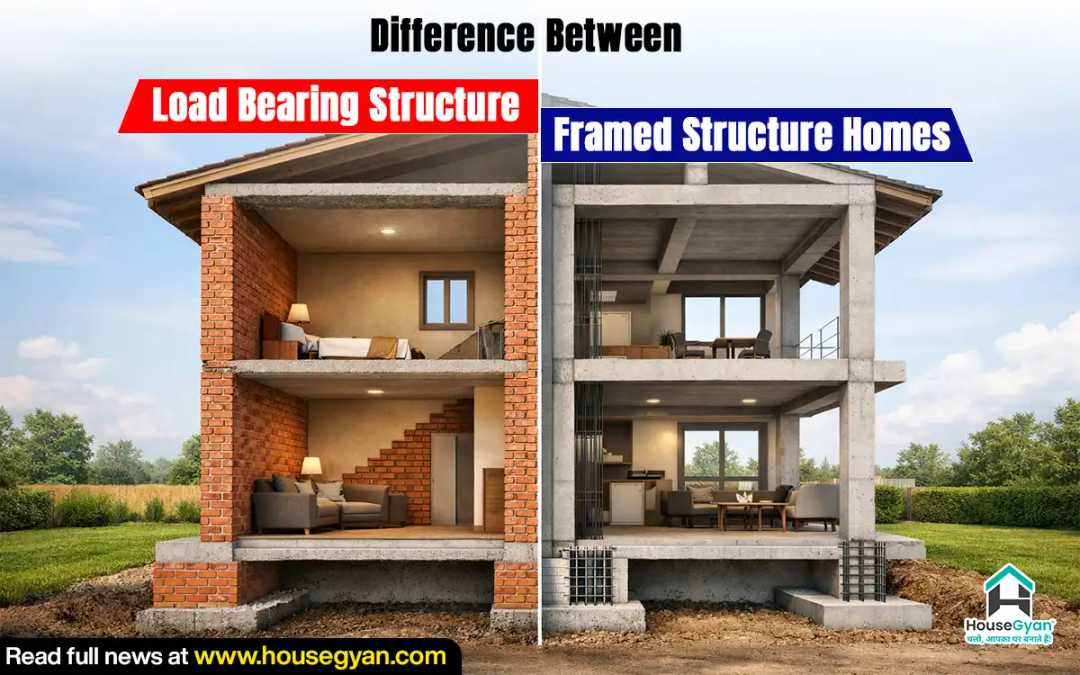
A load bearing structure is a traditional construction method where the walls carry the weight of the entire building. These walls transfer loads from slabs and roofs directly down to the foundation.
The main components include: Load bearing walls Beams (in limited use) Slabs Foundations The walls are usually made of brick, stone, or concrete blocks, making them thick and strong. In a load bearing structure, the load from the roof and floors passes through the walls and then to the ground. This limits the height and flexibility of the building. Typically, such structures are suitable for low-rise buildings. A framed structure is a modern construction system where columns and beams carry the load of the building instead of walls. Walls act only as partitions.Key Components of Load Bearing Structure
How Load Bearing Structure Transfers Load
What Is a Framed Structure?
Components of a Frame Structure Building
A typical frame structure building includes:
-
RCC columns
-
RCC beams
-
Slabs
-
Foundations
Walls in framed structures are non-load bearing and can be modified easily.
Load Distribution in Framed Structure
In framed structure vs load bearing structure, the biggest difference is load transfer. In a framed structure, the load moves from slabs to beams, then to columns, and finally to the foundation. This system allows for taller buildings and better architectural freedom.
Load Bearing Structure vs Framed Structure: Core Differences
Understanding load bearing structure vs frame structure becomes easier when comparing key factors.
Structural Strength and Stability
Framed structures are stronger for multi-story buildings. Load bearing structures are stable but limited in height.
Design Flexibility and Space Planning
Framed structures offer open spaces and flexible layouts. Load bearing walls restrict room size and layout changes.
Construction Cost and Time
Load bearing structures cost less for small homes. Framed structures cost more initially but save money long-term through durability.
Read More: Wondering how much your new home construction will cost? Use our house construction price calculator for an instant, accurate estimate.
Framed Structure and Load Bearing Structure: Material Comparison
This table clearly highlights the difference between load bearing and framed structure from a material perspective.
Load Bearing vs Framed Structure in Residential Homes
For small houses (1–2 floors), load bearing structures may still be suitable. However, for modern homes, apartments, and villas, framed structure construction is preferred due to safety, flexibility, and longevity.
The debate of load bearing structure vs framed structure often depends on budget, land size, and future expansion plans.
Advantages of Load Bearing Structure
-
Lower initial construction cost
-
Simple construction method
-
Suitable for small houses
-
Less skilled labor required
Despite limitations, load bearing structures remain popular in rural and low-rise housing.
Advantages of Framed Structure
-
High earthquake resistance
-
Suitable for high-rise buildings
-
Flexible architectural design
-
Easy future modifications
-
Better load distribution
These benefits make framed structures the top choice in urban construction.
Framed Structure vs Load Bearing Structure: Which Is Better?
There is no single answer. If you want a small, budget-friendly home, a load bearing structure works well. But if safety, expansion, and modern design matter, a framed structure is the better option.
For expert construction standards, you can also refer to guidelines from organizations like the American Concrete Institute .
Conclusion
The difference between load bearing structure and framed structure homes lies in strength, flexibility, cost, and future adaptability. While load bearing structures suit small-scale housing, framed structures dominate modern construction due to safety and design freedom.
Understanding load bearing structure vs framed structure helps homeowners choose wisely and build homes that last for generations.
Frequently Asked Questions (FAQs)
1. What is the main difference between load bearing and framed structure?
The main difference is load transfer. Load bearing structures use walls, while framed structures use beams and columns.
2. Is framed structure more expensive than load bearing structure?
Yes, initially framed structures cost more, but they offer better durability and safety.
3. Which structure is safer during earthquakes?
Framed structures are much safer due to flexible load distribution.
4. Can load bearing structures be modified later?
Modifications are difficult because walls support the load.
5. Why are framed structures popular today?
They allow taller buildings, flexible layouts, and better safety.
6. Which is best for modern homes?
Framed structure is best for modern, long-term residential construction